Featured
Diet Guidelines During Treatment with Braces
How to eat comfortably and successfully during your orthodontic treatment with braces or aligners
Read article



To make sure a tooth correction leads to lasting results, we use retainers. We explain what retainers are and when they are used.
What is a retainer in dentistry?
Permanent retainers with a memory effect: the innovative solution for stable teeth
The advantages of a permanent retainer
Are there also disadvantages to wearing a permanent retainer?
How do I care for my permanent retainer properly?
How long does a permanent retainer have to be worn?
Are lingual retainers covered by statutory health insurance?
How does treatment with a permanent retainer work at Hakim Aesthetics?
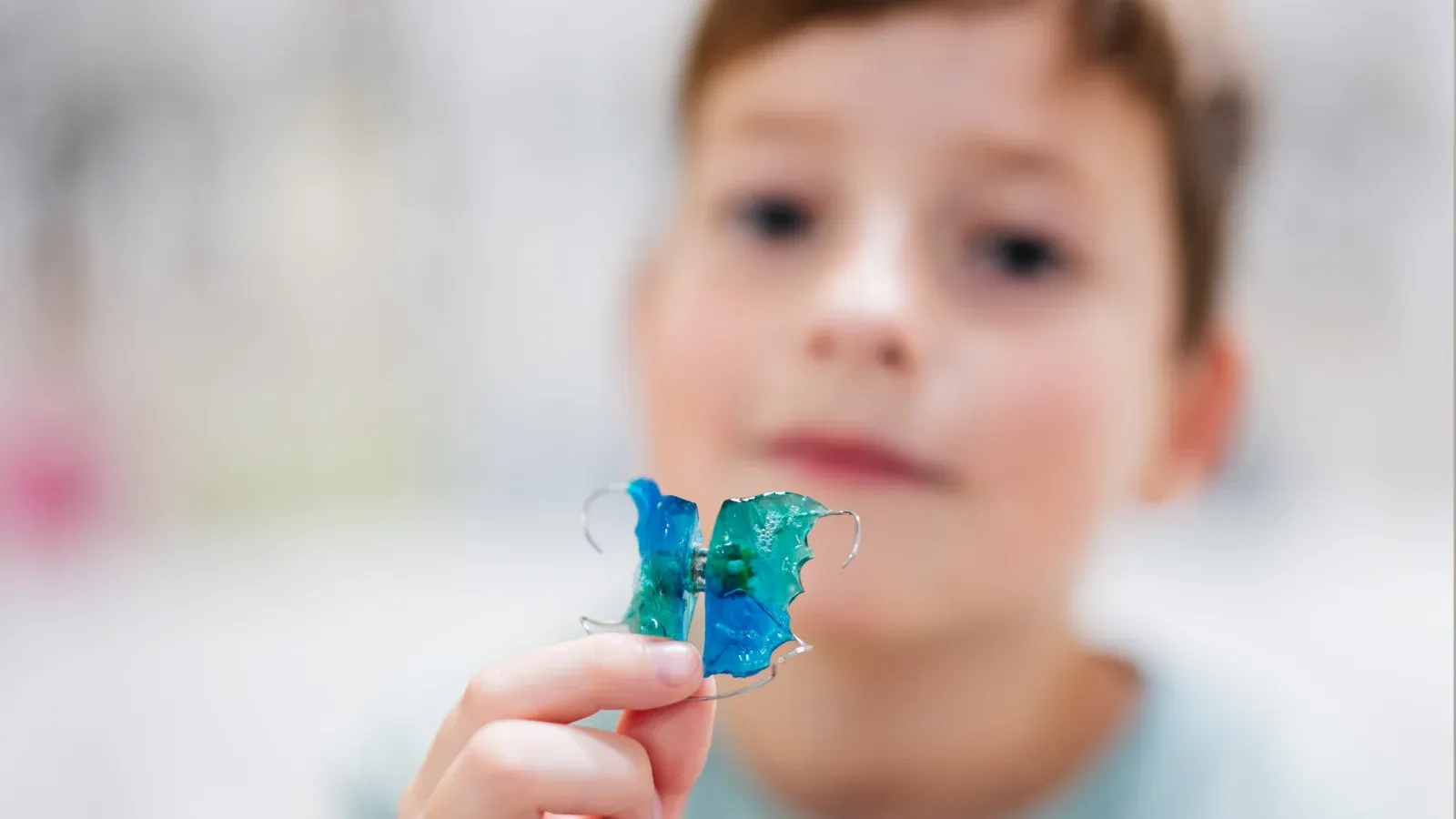
Retainers are used after orthodontic tooth corrections with braces. They serve to hold your teeth in their new, correct place. Using a retainer is an important tool for stabilizing the position of your teeth and securing a lasting tooth correction. There are various options when it comes to treatment with retainers. A distinction is made between fixed and removable retainers. The permanent retainer is worn permanently and is a highly effective solution for stabilizing your teeth in the desired position.
A classic fixed retainer — the permanent retainer — consists of a drawn or braided wire made of high-quality stainless steel that is attached to the inside of your front teeth. This form of retainer is therefore — similar to lingual braces — invisible from the outside.
In our orthodontic practice we use a highly modern and particularly high-quality material called Memotain for your retainer. It stands out for its exceptionally high flexibility combined with high strength at the same time. Your retainer can therefore adapt to the natural movements of your teeth and still keep its shape. Memotain retainers have what is known as a memory effect: through the “memory” of the wire, they hold your teeth in the right position for a long-lasting, beautiful smile.
Depending on the preceding diagnosis and orthodontic treatment, your retainer is bonded to particular teeth — from canine to canine, for example. So the first advantage of the permanent retainer lies in its invisibility. It usually causes few side effects — only in the initial period can slight speech difficulties such as lisping occur, due to its position. As a rule, this settles down once you have got used to the retainer. In our experience, the permanent retainer causes little to no disturbance when eating, and effective dental care is still readily possible despite the retainer.
Our permanent retainer is made of a high-quality, well-tolerated material that adapts to your teeth. It is attached to the inside of the teeth and is therefore invisible. After a short period of getting used to it, you will hardly notice the retainer any more. Eating is possible without any problem, and daily dental and oral hygiene remains fully possible despite the retainer. Another advantage of permanent retainers: you cannot lose them or forget them, because they are firmly attached to your teeth.
How a fixed retainer feels differs from person to person. People who suffer from severe claustrophobia should consider whether they want to wear a fixed retainer. A permanent retainer can encourage plaque and tartar. Good dental hygiene is therefore particularly important. In addition, you should have a professional dental cleaning carried out regularly.
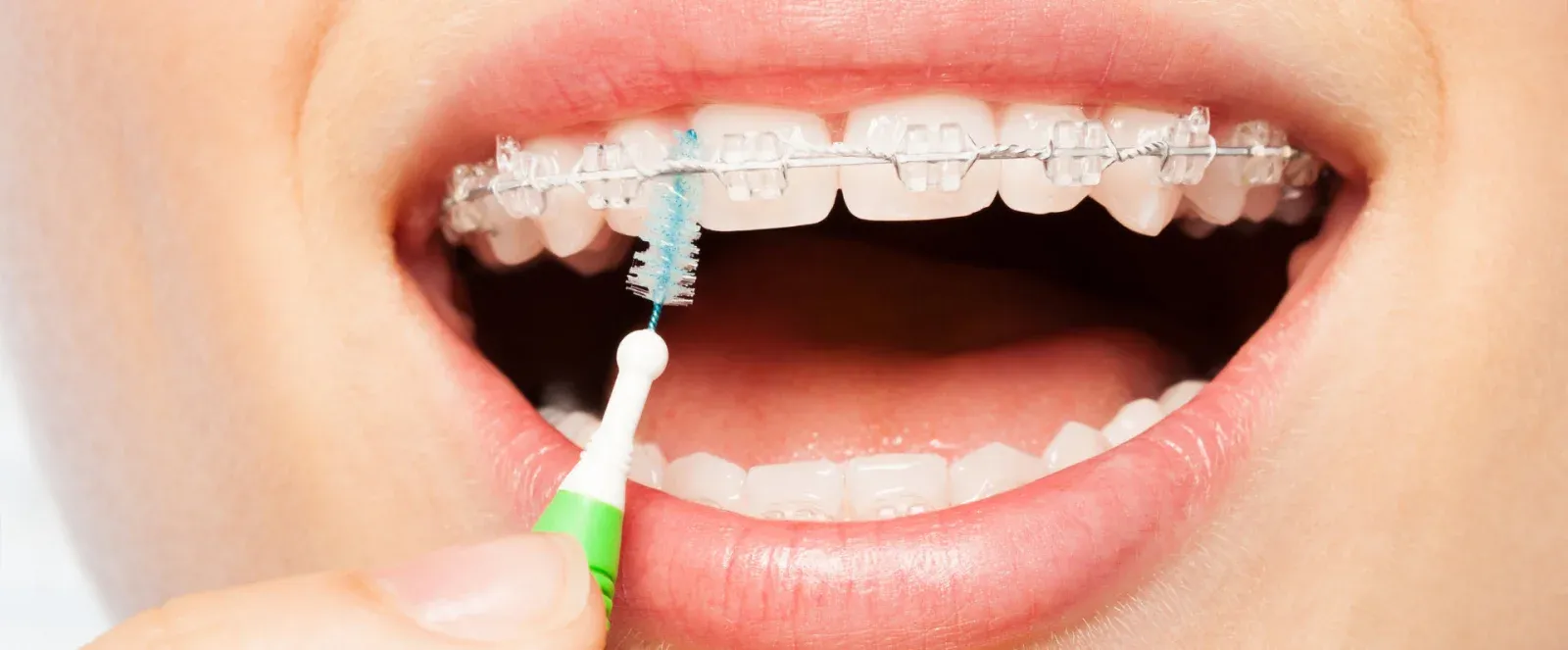
As a rule, sufficient daily dental care is readily possible while wearing the permanent retainer as well. With a fixed retainer, however, you should pay attention to particularly thorough oral hygiene in order to prevent plaque and tooth decay. Alongside regular brushing with a toothbrush and toothpaste, it is therefore a good idea to clean the spaces between your teeth with interdental brushes.
The wear time always depends on the individual condition of your teeth and your dentition as well as on the treatment goals. As a rule, the retainer stays in your mouth for about 5 to 10 years in order to hold your teeth in the desired position. In some cases the retainer stays in the mouth even longer. We will advise you on the ideal wear time. A check of your retainer at least once a year is a good idea, in order to review its fit and make adjustments if necessary.
Unfortunately, wearing a permanent retainer is not normally covered by statutory health insurance. Only in cases of severe malocclusion is coverage possible. We will be glad to advise you on this topic at a personal appointment.
A retainer is necessary in order to secure the result of a tooth correction. A retainer prevents your teeth from shifting back into their original position. In addition, the bone structure in the front segment of your jaw changes over the course of time, which often leads to crowding of the teeth. Without being held in place by a retainer, there is a risk that your teeth will shift again because of the changed bone structure.
Dr. Hakim and his team attach great importance to you, together with your needs and wishes, always being at the center of attention. Transparency is a particular concern for us in this. That is why we explain your options to you even before the actual orthodontic tooth correction.
We examine your dentition with the help of modern procedures and assess, on the basis of the circumstances, which materials and applications are the best option for you.
Once you have decided on a permanent retainer, it is made individually for you. To do this, we create a digital impression of your teeth in our practice. Based on this impression, a retainer is produced that is precisely adapted to your teeth. Alternatively, the retainer can also be attached directly to your teeth. We will be glad to explain things to you if you have any questions.
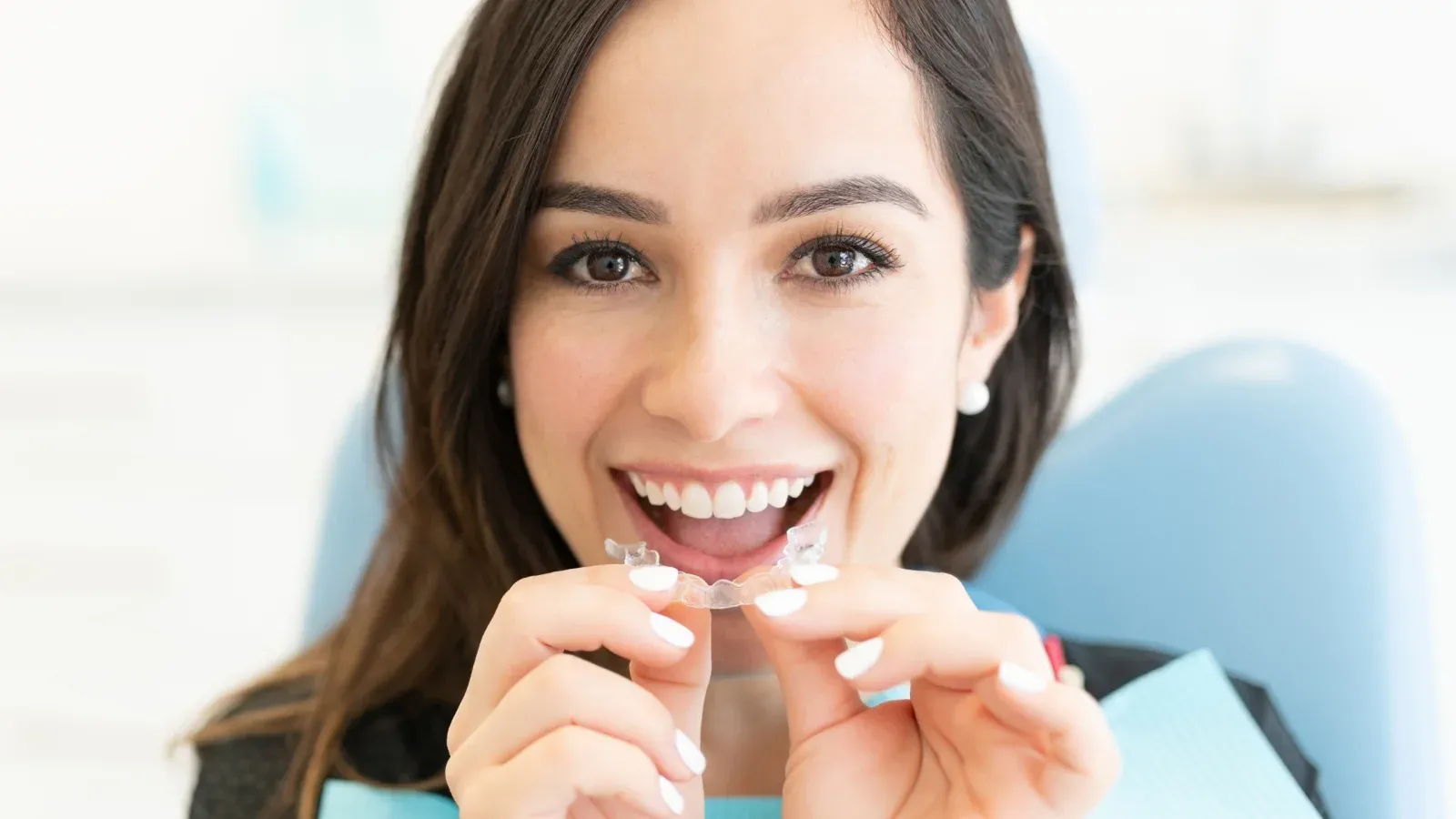
In a further session, your retainer is placed directly by the orthodontist. This procedure is quick and usually low in discomfort. For a certain time, a removable brace or a retention splint, similar to an aligner, will also hold your teeth in the new position until the results have stabilized.
Routine checks are carried out at regular intervals. Here we check whether your retainer still fits correctly and is fulfilling its function.
Do you have further questions about permanent retainers? — Then please get in touch with us. Dr. Hakim and his team are personally there for your concerns!
Featured
Diet Guidelines During Treatment with Braces
How to eat comfortably and successfully during your orthodontic treatment with braces or aligners
Read articleFeatured
Oral Hygiene for Braces Wearers
Tips for effective oral hygiene with braces: avoid tooth decay, white spots, and inflammation. Keep your teeth and braces healthy throughout the treatment.
Read articleFeatured
Teeth Correction for Adults and Seniors
Find out how clear aligners, lingual braces or fixed braces can also correct aesthetic and functional problems later in life.
Read articleFeatured
CBCT in Orthodontics Frankfurt | Precise 3D Diagnostics & Planning
Find out why cone beam computed tomography (CBCT) is crucial for your teeth straightening. Precise, with a low radiation dose at Hakim Healthcare Frankfurt.
Read articleFeatured
Aligner Therapy Avoids Tooth Extraction
Gentle aligner therapy is often possible without removing teeth. Learn when extractions can be avoided – get advice from Dr. Hakim in Frankfurt.
Read articleFeatured
Orthodontics vs. Prosthodontics
Orthodontics or prosthetic solutions? Why correcting your teeth with aligners or fixed braces is healthier and more sustainable in the long run.
Read articleFeatured
Aligner Myths at Hakim Healthcare Frankfurt
The aligner mystery – what is actually true? Hakim Aesthetics clears up the most common misconceptions and shows you what aligners can really achieve.
Read articleFeatured
Aligner Tips from Hakim Healthcare Frankfurt
Are you wearing aligners or planning a treatment? The best tips and tricks for a fast, effective and comfortable tooth correction.
Read articleFeatured
Dental Monitoring – Smart Orthodontics
Innovative orthodontics with Dental Monitoring at Hakim Aesthetics in Frankfurt. More precise control, fewer appointments – for efficient tooth correction.
Read articleFeatured
Interdisciplinary Aesthetic Dentistry
Interdisciplinary aesthetic dentistry at your orthodontist - how you benefit from the interdisciplinary collaboration in our Frankfurt practice!
Read articleFeatured
Digital Workflow in Dentistry
AI in dentistry? How is that supposed to work? Find out how you benefit from the digital workflow in dentistry and where its limits are.
Read articleFeatured
Dysgnathia | Causes, Symptoms and Treatment
Dysgnathia refers to a misalignment of the jaw. We explain the causes, the symptoms and the treatment options that are available to you.
Read articleFeatured
Overbite – Causes, Effects and Treatment
Correcting an overbite in Frankfurt – without surgery, without extraction. Dr. Hakim explains causes, effects & all treatment options. ✓ Personal initial consultation
Read articleFeatured
Gaps Between Teeth – Causes and Treatment
A gap between your teeth can look charming. But not everyone likes a gap between their teeth. We explain the treatment options available to you.
Read articleFeatured
Open Bite – Causes and Treatment
Treating an open bite – discreet & effective. Dr. Hakim, orthodontist in Frankfurt, explains all the options: aligners, fixed & removable braces.
Read articleFeatured
Crossbite – Causes and Treatment
A crossbite affects not only your appearance but also the function of your bite considerably. How a crossbite can be prevented and treated.
Read articleFeatured
Dental Splints and Aligners for Every Need
Correct misaligned teeth effectively but discreetly with a clear aligner or a dental splint.
Read articleFeatured
Options for Teeth Correction
A radiant smile adds a great deal to your self-confidence. Hakim Aesthetics orthodontics shows you the right solution for your teeth correction.
Read articleFeatured
Permanent Retainer: Lasting Tooth Correction
To make sure a tooth correction leads to lasting results, we use retainers. We explain what retainers are and when they are used.
Read articleFeatured
How Misaligned Teeth Can Be Treated
Misaligned teeth are widespread and disturb the visual appearance. We explain how they can be treated.
Read articleFeatured
Braces for Adults - Our Service
Braces for adults in Frankfurt – discreet & modern. Dr. Hakim offers fixed brackets, lingual braces & aligners. ✓ Arrange your consultation now.
Read articleFeatured
Straight Teeth for Adults
Straight teeth for adults in Frankfurt – with clear aligners or braces. Dr. Hakim advises you personally. ✓ Discreet, fast & without extraction.
Read article