






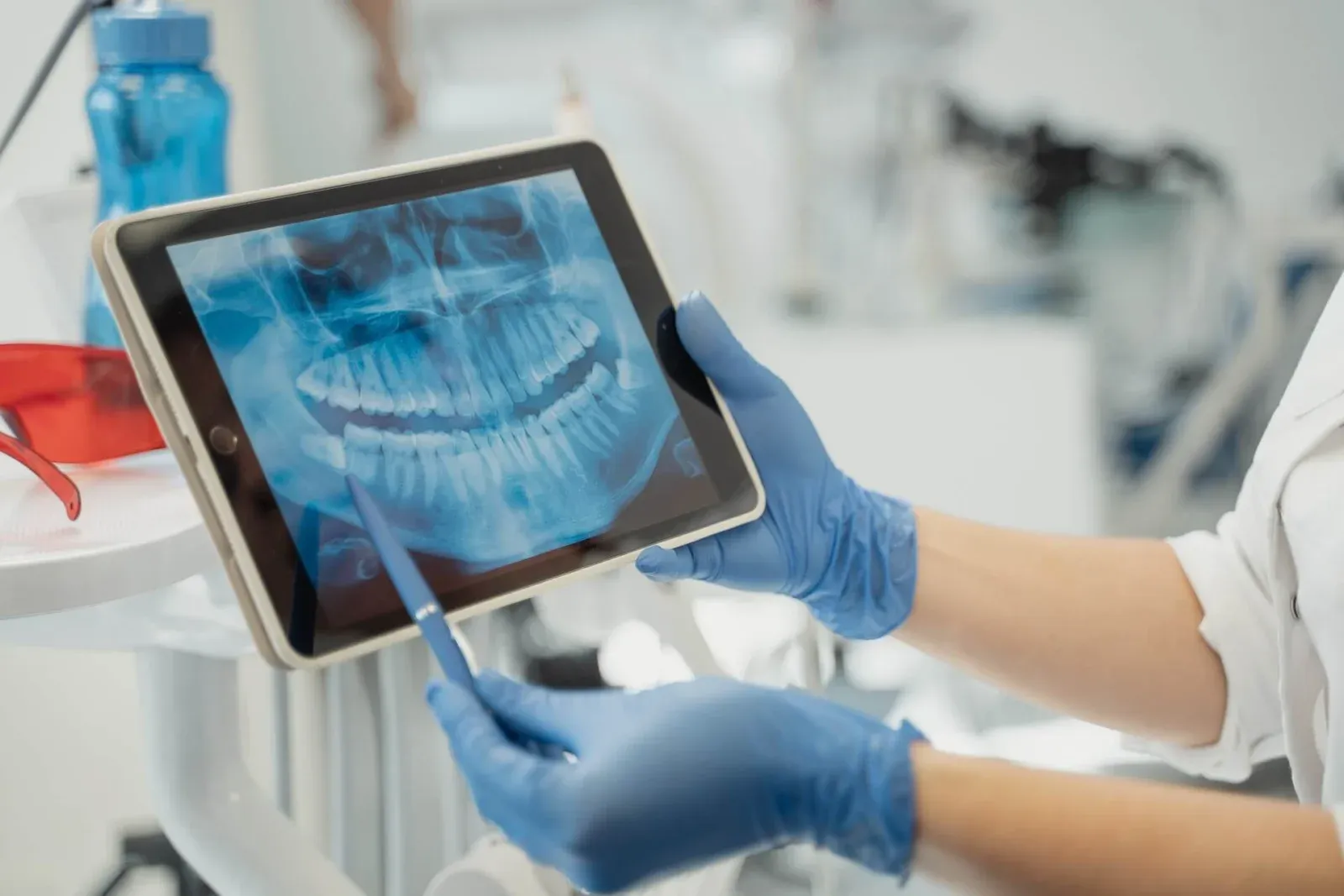

Therapy for temporomandibular disorder
Our specialized temporomandibular joint therapy (therapy for temporomandibular disorder) is designed to relieve symptoms and improve the health of your jaw. We understand how important a healthy temporomandibular joint is for your overall well-being, and we offer tailored therapy plans to bring you back into balance. Your well-being is at the center of everything we do.
TMJ therapy for TMD – treating pain and its causes
With the right temporomandibular joint therapy, we treat both the symptoms and the causes of your jaw joint complaints. The symptoms of TMD can be very varied. The most common complaints among our patients with TMD:
- Pain in the jaw area, especially when chewing or speaking
- Restricted mouth opening or a limited range of jaw movement
- Clicking or grinding of the temporomandibular joints
- Headaches, neck pain or pain in the ear that can originate in the jaw region
- Muscle tension in the face and neck area
- Teeth grinding during sleep
Our services for TMD jaw treatment
TMD (temporomandibular disorder) refers to a malfunction of the masticatory system. This malfunction is triggered by a disturbed interplay of joints, muscles and tendons. TMD can be brought on by psychological as well as physical causes. For lasting results, we place great emphasis on treating your symptoms and on resolving the cause of your temporomandibular joint problems.
The benefits of temporomandibular joint therapy at a glance:
- may help relieve headaches and temporomandibular joint pain
- may ease tinnitus in some cases
- may help reduce dizziness
- better sleep thanks to a reduction in symptoms
- regaining quality of life in everyday situations
- therapy adapted to your needs with splints made specifically for you
- use of the highest-quality materials
- a holistic therapy concept aimed at your individual well-being
What exactly is temporomandibular joint therapy?
The temporomandibular joint is exposed to considerable strain every day. Incorrect loading, misalignment of the jaw and teeth, poorly fitting prosthodontics, but also structural irregularities in the bone as well as stress and other causes can ultimately lead to jaw pain. In temporomandibular joint therapy, we focus on relieving and healing functional disorders of the masticatory system. We first ease acute complaints and then determine the exact cause of your jaw dysfunction. If the cause lies outside our orthodontic field, we also work on an interdisciplinary basis with the relevant specialists. When it comes to resolving causes in the dental area, we are glad to advise and support you so that you receive the right long-term solution to the problem.
When does temporomandibular joint therapy help?
Depending on its cause, TMD produces a wide range of symptoms. Pain can occur both at rest and while moving the jaw. It may be permanent or recurring, and is usually described as dull and radiating. Often the pain even radiates into the ears, the head, the forehead, the temples and the back. Tinnitus and dizziness are not uncommon either. If you are affected by TMD, this can considerably restrict your everyday life over time.
Temporomandibular joint therapy can help relieve troublesome symptoms. Headaches, dizziness, temporomandibular joint pain and other symptoms can be treated and often eased. As a result of temporomandibular joint therapy, your sleep quality may improve and you can go through your day with less discomfort.
Orthodontic temporomandibular joint therapy consists above all of a comprehensive range of high-quality splints, which we select for you according to your needs. Thanks to special splints that you can take out at any time, your symptoms can be noticeably reduced within a short time.
How temporomandibular joint therapy works
Throughout the entire therapy, we place great importance on individual advice and on your well-being. So that you are always well informed, we explain the treatment steps to you in detail beforehand. Below you will find an initial overview of how temporomandibular joint therapy proceeds:
Initial consultation and information: In a personal initial consultation, we inform you about the various therapy methods and find out which therapy best matches your needs. You are welcome to tell us about your individual expectations — we listen to you.
Thorough examination and diagnosis: An exact diagnosis of jaw function is essential in order to create an effective therapy plan for you. Here, above all, the manual functional analysis of the temporomandibular joint is used.
3D visualization of your teeth: Thanks to our modern 3D technology, we can display your teeth virtually. This allows us to capture even the smallest details in order to find possible orthodontic causes of TMD and, where appropriate, to have suitable high-quality splints made for you.
Symptom therapy: phase 1 of temporomandibular joint therapy
We work in two phases in order to relieve your complaints as quickly as possible. That is why we first focus above all on easing your symptoms. To get rid of pain, we use removable grinding splints or clenching splints. Attuned to your needs, we choose between different splints, such as the protrusion splint, the Michigan splint and other TMD splints.
More information on splint therapy
Depending on the condition of your teeth and the problem at hand, we use different splint materials, such as soft and hard splints. The way the various splints work also differs. While the protrusion splint or the Michigan splint influences the function and position of the jaw and serves to relax the jaw and head muscles, a grinding splint mainly serves to cushion the strong pressure of unconsciously clenching the teeth together. The splints can therefore be closely adapted to your habits and to the requirements of your jaw. Depending on your needs, accompanying physiotherapy or medication-based therapy may be useful.
Treating the causes: phase 2 of temporomandibular joint therapy
Sustainable treatment and a holistic view of your symptoms are particularly important to us. This allows us to find out how your temporomandibular joint disorder originally developed and to resolve the cause. If the causes lie in misaligned teeth, we will plan the right orthodontic therapy with aligners, such as Invisalign, or with fixed braces for you. If, for example, prosthodontics need to be renewed or incorrectly loaded teeth are the cause of your problems, we cooperate with your dentist. In some cases it can make sense to have the symptoms assessed from a neurological or orthopedic perspective. A visit to an ENT specialist can also be informative under certain circumstances. Where needed, we recommend interdisciplinary cooperation with additional specialists.
FAQs – frequently asked questions about temporomandibular joint therapy
What does temporomandibular joint therapy cost?
The initial consultation, and with it the first examination of your teeth, is covered by statutory health insurance. Where the jaw symptoms call for it, health insurance also covers an occlusal splint or bite splint. Any other splints, such as dual splints or specially manufactured ones, are not paid for by health insurance. An accurate diagnosis and an optimal fit for your splint also require additional treatment steps that health insurance does not cover. We are happy to explain the treatment steps and the costs to you in your initial consultation.
Who is temporomandibular joint therapy suitable for?
Temporomandibular joint therapy is suitable for all patients who suffer from symptoms such as jaw pain, subtle tooth pain "with no findings", dizziness, tinnitus and the other symptoms already mentioned, provided that a functional disorder of the temporomandibular joint is present from a medical point of view. For this reason, a manual examination of the jaw should always take place before temporomandibular joint therapy begins. Only then can the therapy be applied in a targeted way — or, depending on the diagnosis, alternative treatment options be recommended.
Do you have further questions about temporomandibular joint therapy? Simply get in touch with us online and book your next appointment. Dr. Hakim and his experienced team are happy to help you.