Featured
Diet Guidelines During Treatment with Braces
How to eat comfortably and successfully during your orthodontic treatment with braces or aligners
Read article



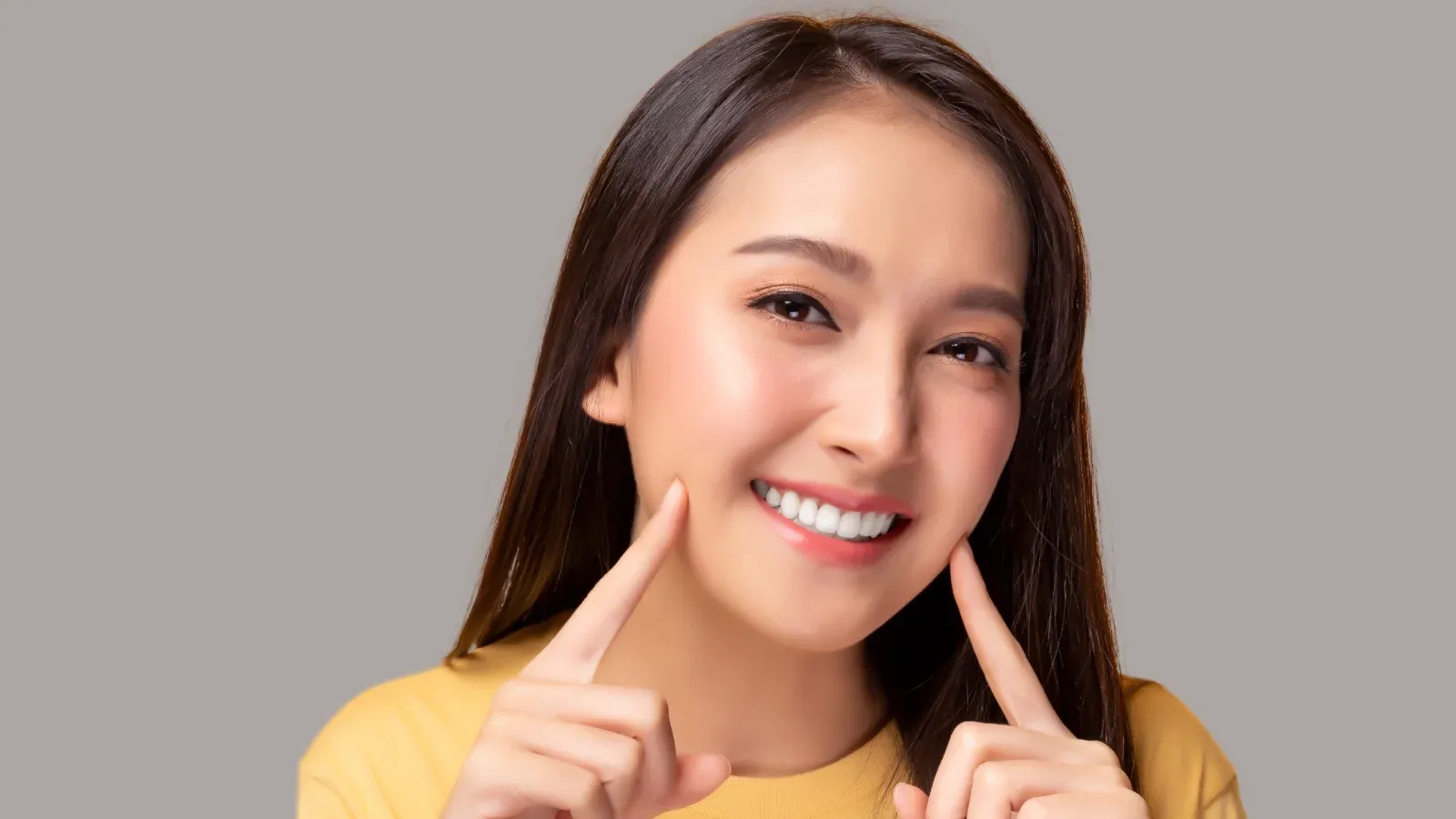
Treating an open bite – discreet & effective. Dr. Hakim, orthodontist in Frankfurt, explains all the options: aligners, fixed & removable braces.
One of the most common malocclusions in children and adults is what is known as an open bite. For many of those affected, correcting it makes sense not only from an aesthetic point of view, it can also protect against consequential damage.
Read on to learn what causes an open bite, why it should be treated and which treatment options are available. Dr. Hakim is of course happy to advise you personally. Simply arrange an appointment at our practice for this.
Why an open bite should be treated
Open bite: the treatment options for children and adults
Does health insurance cover the treatment costs?
Personal consultation and an individual treatment concept
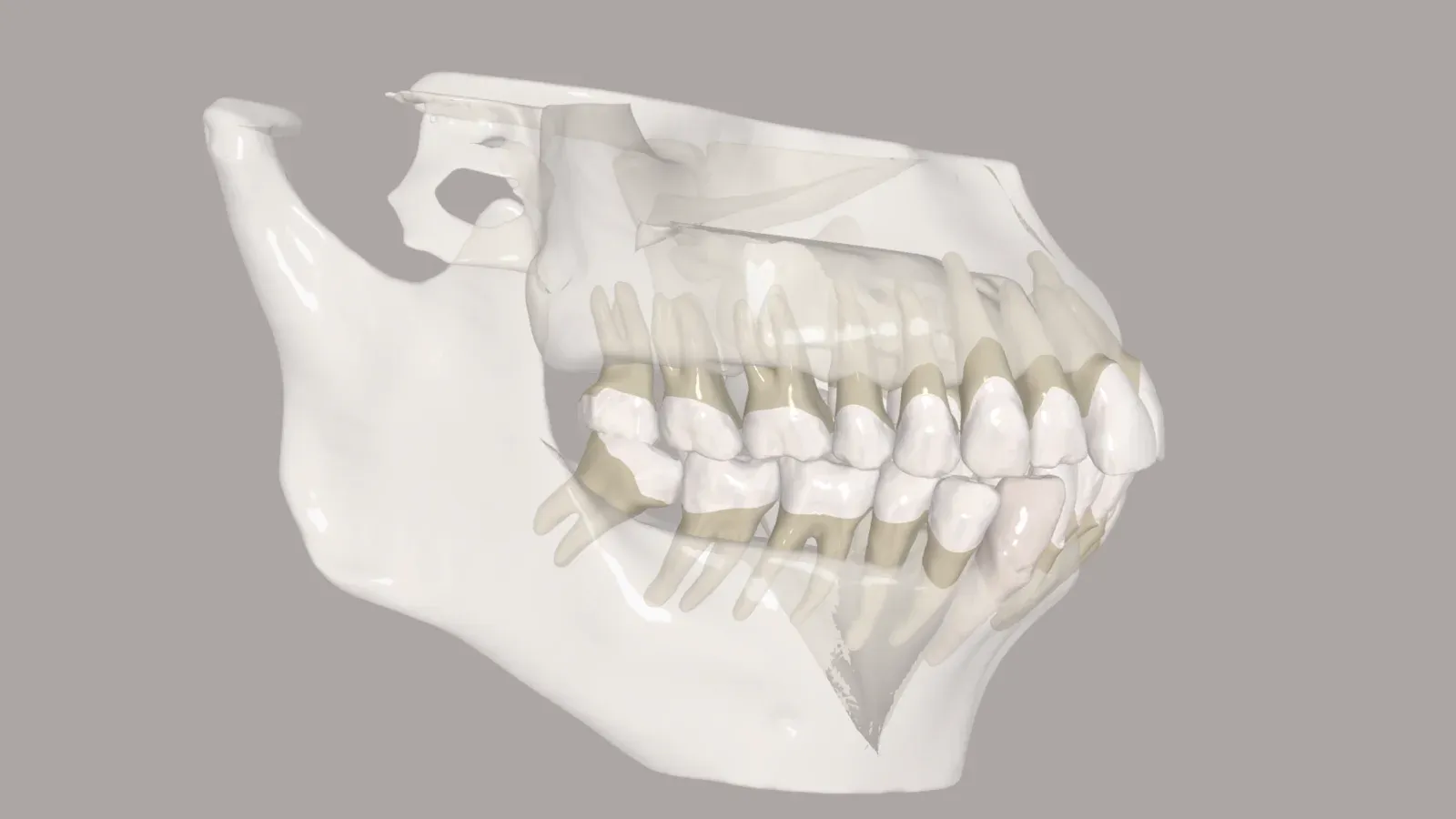
An open bite is a malocclusion in which the teeth of the upper and lower jaw do not meet properly, so that a gap remains between them – even when the mouth is closed. Depending on how pronounced the misalignment is, this gap can be larger or smaller. If the front teeth are affected, we speak of an anterior open bite. In the case of the lateral teeth it is a lateral open bite (also: with a gap between the molars in the upper and lower jaw (“posterior open bite”). Depending on the anatomy of the jaw and the arrangement of the teeth, the types of open bite can occur individually or in combination and to varying degrees.
In general, a distinction is made between a skeletal open bite, which has its cause in the bone structure, and a habitual open bite, which has come about through improper function and improper loading of the teeth.
An open bite at the front teeth can either be genetic or the result of unfavorable habits in childhood. Examples of behaviors that encourage an open bite are thumb sucking, excessively frequent or prolonged sucking on a drinking bottle, or the use of a pacifier beyond the third birthday. A lateral open bite is either genetic or develops through improper function of the jaw and the soft tissue.
Regardless of the causes, an open bite can persist into adulthood and cause health problems over time. To prevent this, malocclusions should be treated as early as possible.
Left untreated, an open bite can lead to sometimes considerable speech and chewing problems as well as various other complaints and limitations.
With a lateral open bite, the lateral teeth do not meet when chewing. On the one hand this makes chewing itself more difficult, which can result in problems with food intake (all the way to digestion). On the other hand, because the teeth provide no resistance, the chewing force is automatically transferred to the temporomandibular joints. These are worn down heavily by the unnaturally high load and often react with persistent pain.
With an anterior open bite there is a gap between the upper and lower row of teeth, which means that those affected breathe through the mouth more often than through the nose. This can have unpleasant consequences, for example a dry mouth, constant irritation of the throat and an increased susceptibility to tooth decay and respiratory illnesses. Because of the open bite, some people cannot pronounce individual letters properly, because the tongue cannot rest correctly against the teeth, and they lisp for that reason, for instance.
Last but not least, an open bite can also become an aesthetic problem for those affected, which means their self-confidence and sense of well-being suffer.
Depending on the cause and the age, various treatment options are available for correcting an open bite. In very severe cases, often only surgery can help to bring the jaw into the right position. In mild or moderate cases there are alternatives for children and adults to treat the open bite effectively.
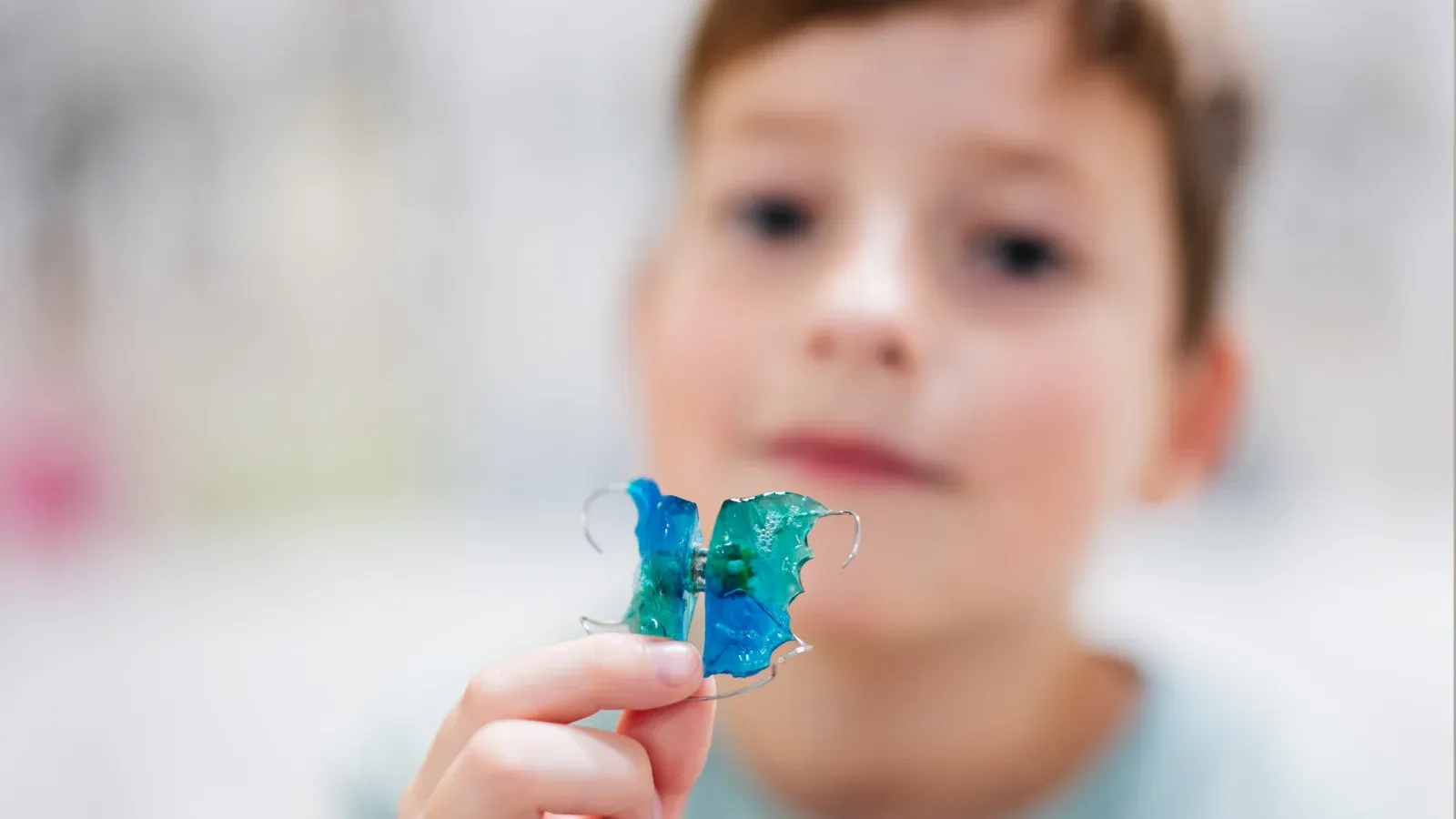
The first step in treatment for young children is to stop the unfavorable habits mentioned above. This requires a certain amount of readjustment, but it can lead to the misalignment receding on its own. The prerequisite for this is that it is not yet too pronounced. In some cases, additional measures such as special exercises for the mouth or the facial muscles can support the treatment. For older children, orthodontic treatment is often the method of choice. Depending on whether the child still has baby teeth or already the permanent teeth, we recommend removable or fixed braces in order to guide jaw growth positively.
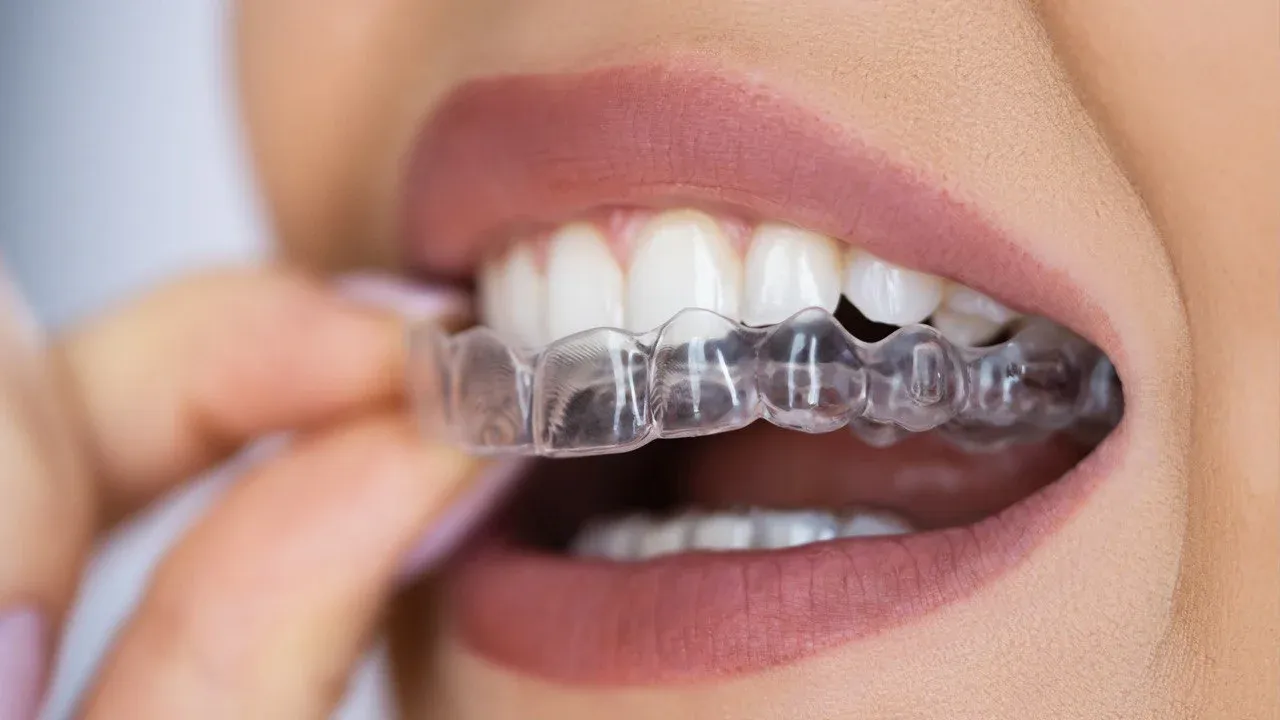
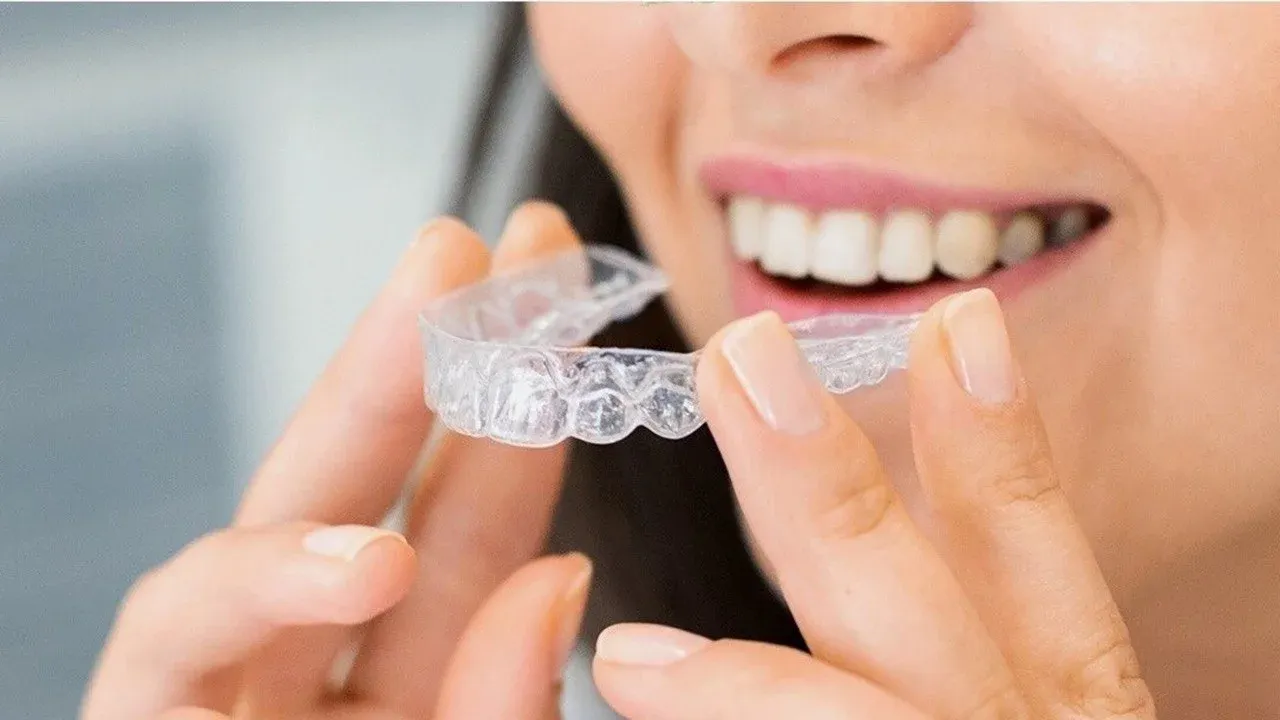
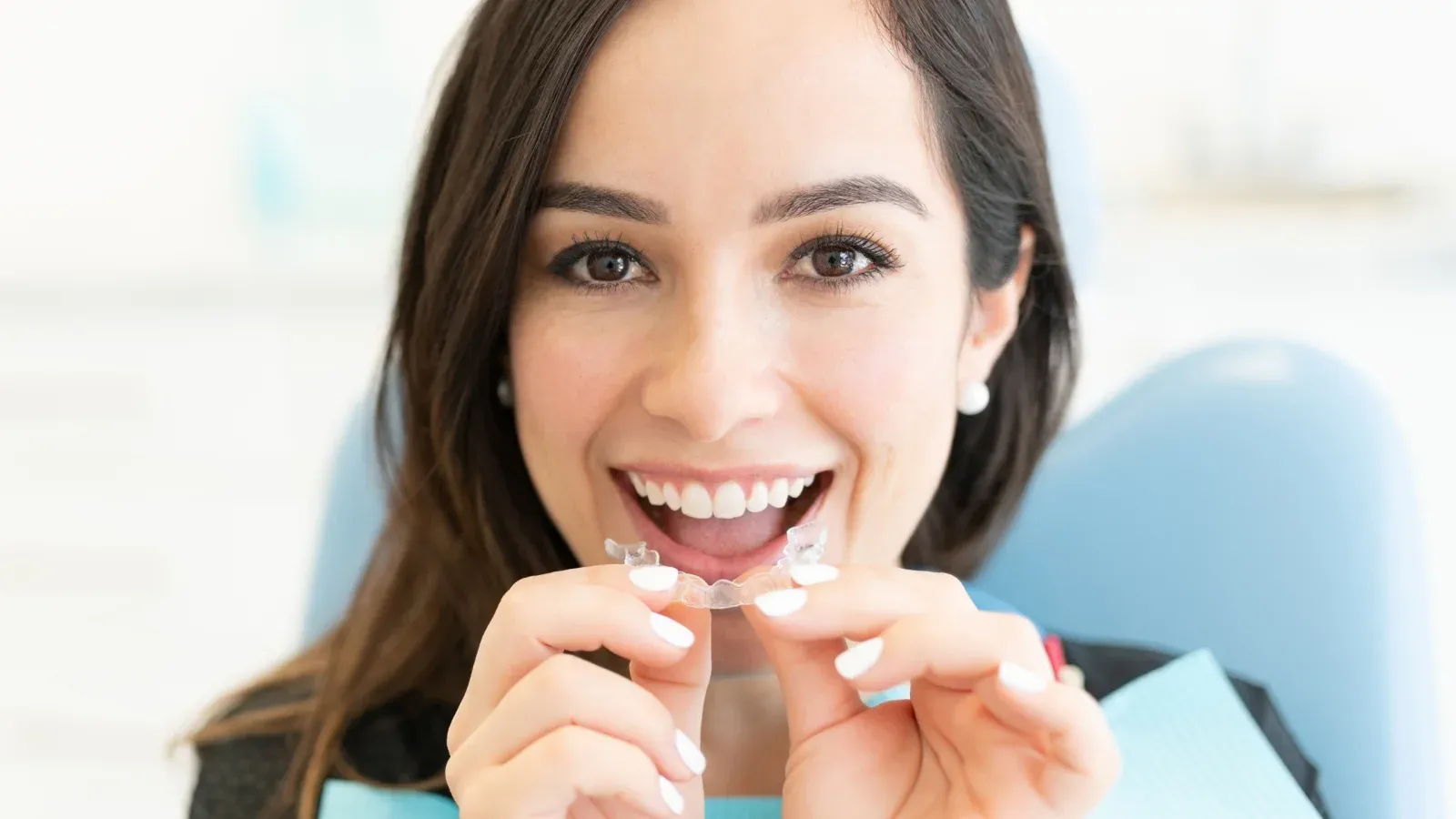
In adults, too, an open bite can be corrected with fixed braces. However, many of our adult patients prefer a clear aligner (aligner or Invisalign), because it is less noticeable and the treatment can therefore be carried out discreetly. The aligner is made individually for you and is replaced again and again by a new one during the treatment, as soon as the next milestone is reached.
Unlike fixed braces, aligners are removable. For treatment results that come as quickly and last as long as possible, however, it is important that you wear the aligner as often and as long as possible. Ideally you use it around the clock and take it out only for eating and brushing your teeth, so that you reach a wear time of about 22 hours a day.
Whether the treatment is covered depends primarily on how severe the misalignment is and on the treatment method chosen. From a certain degree of severity onward, statutory health insurance pays for the standard care (for example fixed braces, but not aligners). The degree of severity is expressed in what are known as indication groups (KIG). For adults, the prerequisite for coverage is jaw indication group level 4 including surgery. In this group, the distance between the teeth caused by the open bite is at least 4mm and correcting this misalignment is medically necessary and urgently required. For lower indication groups, statutory health insurance does not pay in adulthood, but some private supplementary dental insurance policies possibly do. Please check with your health insurance provider about this – before treatment begins.
An open bite can cause various health complaints and/or disturb your aesthetic sense and thereby considerably affect your quality of life. So that you feel comfortable again and can enjoy life, we offer you a tailored treatment concept at our practice for correcting the misalignment. Based on a thorough preliminary examination and a personal consultation, Dr. Hakim draws up your individual treatment plan, with which we put your wishes into practice.
Featured
Diet Guidelines During Treatment with Braces
How to eat comfortably and successfully during your orthodontic treatment with braces or aligners
Read articleFeatured
Oral Hygiene for Braces Wearers
Tips for effective oral hygiene with braces: avoid tooth decay, white spots, and inflammation. Keep your teeth and braces healthy throughout the treatment.
Read articleFeatured
Teeth Correction for Adults and Seniors
Find out how clear aligners, lingual braces or fixed braces can also correct aesthetic and functional problems later in life.
Read articleFeatured
CBCT in Orthodontics Frankfurt | Precise 3D Diagnostics & Planning
Find out why cone beam computed tomography (CBCT) is crucial for your teeth straightening. Precise, with a low radiation dose at Hakim Healthcare Frankfurt.
Read articleFeatured
Aligner Therapy Avoids Tooth Extraction
Gentle aligner therapy is often possible without removing teeth. Learn when extractions can be avoided – get advice from Dr. Hakim in Frankfurt.
Read articleFeatured
Orthodontics vs. Prosthodontics
Orthodontics or prosthetic solutions? Why correcting your teeth with aligners or fixed braces is healthier and more sustainable in the long run.
Read articleFeatured
Aligner Myths at Hakim Healthcare Frankfurt
The aligner mystery – what is actually true? Hakim Aesthetics clears up the most common misconceptions and shows you what aligners can really achieve.
Read articleFeatured
Aligner Tips from Hakim Healthcare Frankfurt
Are you wearing aligners or planning a treatment? The best tips and tricks for a fast, effective and comfortable tooth correction.
Read articleFeatured
Dental Monitoring – Smart Orthodontics
Innovative orthodontics with Dental Monitoring at Hakim Aesthetics in Frankfurt. More precise control, fewer appointments – for efficient tooth correction.
Read articleFeatured
Interdisciplinary Aesthetic Dentistry
Interdisciplinary aesthetic dentistry at your orthodontist - how you benefit from the interdisciplinary collaboration in our Frankfurt practice!
Read articleFeatured
Digital Workflow in Dentistry
AI in dentistry? How is that supposed to work? Find out how you benefit from the digital workflow in dentistry and where its limits are.
Read articleFeatured
Dysgnathia | Causes, Symptoms and Treatment
Dysgnathia refers to a misalignment of the jaw. We explain the causes, the symptoms and the treatment options that are available to you.
Read articleFeatured
Overbite – Causes, Effects and Treatment
Correcting an overbite in Frankfurt – without surgery, without extraction. Dr. Hakim explains causes, effects & all treatment options. ✓ Personal initial consultation
Read articleFeatured
Gaps Between Teeth – Causes and Treatment
A gap between your teeth can look charming. But not everyone likes a gap between their teeth. We explain the treatment options available to you.
Read articleFeatured
Open Bite – Causes and Treatment
Treating an open bite – discreet & effective. Dr. Hakim, orthodontist in Frankfurt, explains all the options: aligners, fixed & removable braces.
Read articleFeatured
Crossbite – Causes and Treatment
A crossbite affects not only your appearance but also the function of your bite considerably. How a crossbite can be prevented and treated.
Read articleFeatured
Dental Splints and Aligners for Every Need
Correct misaligned teeth effectively but discreetly with a clear aligner or a dental splint.
Read articleFeatured
Options for Teeth Correction
A radiant smile adds a great deal to your self-confidence. Hakim Aesthetics orthodontics shows you the right solution for your teeth correction.
Read articleFeatured
Permanent Retainer: Lasting Tooth Correction
To make sure a tooth correction leads to lasting results, we use retainers. We explain what retainers are and when they are used.
Read articleFeatured
How Misaligned Teeth Can Be Treated
Misaligned teeth are widespread and disturb the visual appearance. We explain how they can be treated.
Read articleFeatured
Braces for Adults - Our Service
Braces for adults in Frankfurt – discreet & modern. Dr. Hakim offers fixed brackets, lingual braces & aligners. ✓ Arrange your consultation now.
Read articleFeatured
Straight Teeth for Adults
Straight teeth for adults in Frankfurt – with clear aligners or braces. Dr. Hakim advises you personally. ✓ Discreet, fast & without extraction.
Read article