Featured
Diet Guidelines During Treatment with Braces
How to eat comfortably and successfully during your orthodontic treatment with braces or aligners
Read article



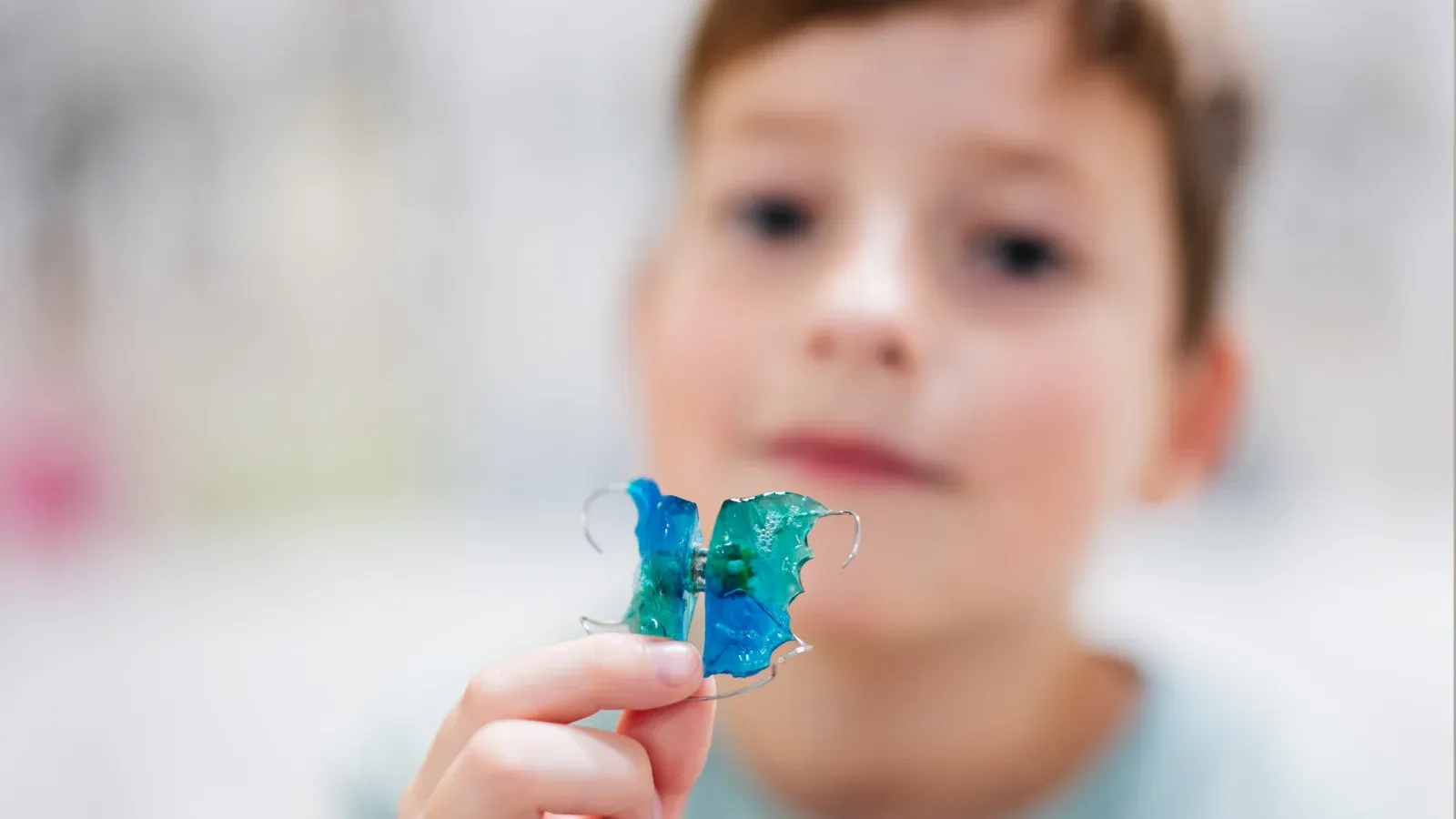
A crossbite affects not only your appearance but also the function of your bite considerably. How a crossbite can be prevented and treated.
A crossbite is a common malocclusion that often affects not only the appearance but also the function of the bite. Whatever the cause of the misalignment, it can lead to excessive tooth wear, temporomandibular joint problems and difficulty chewing. We will tell you which treatment options are available to you if you have a crossbite.
Dr. Hakim offers tailored treatments to correct the misalignment with modern orthodontic methods and to resolve the problems that come with it. Read on to learn more about the causes, possible consequences and treatment options that can help you achieve a healthy bite and a beautiful smile. It is best to arrange an appointment right away for a personal, no-obligation consultation with Dr. Hakim.
Detailed consultation and individual treatment
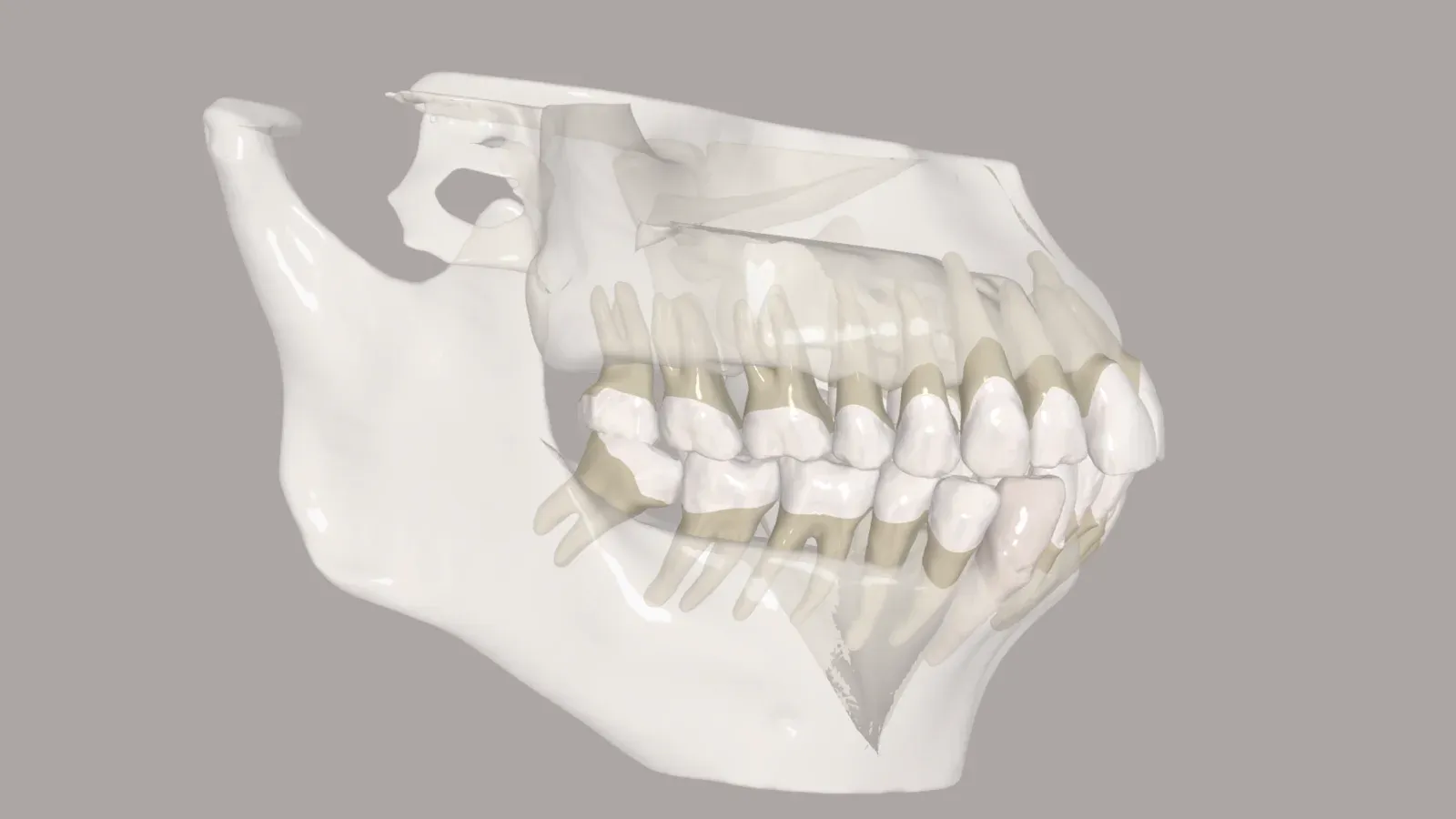
A crossbite is a malocclusion in which the upper and lower teeth do not sit correctly on top of one another. Normally, the upper teeth sit slightly in front of the lower teeth, while the molars of the upper and lower jaw are positioned exactly above each other so that they interlock properly when chewing. With a crossbite, however, the upper teeth sit behind the lower teeth, because the upper teeth reach too far inward (toward the palate) or the lower teeth too far outward (toward the cheek). This misalignment can occur on one side or on both sides. A special case is what is known as an edge-to-edge bite. Here the edges of the front teeth and the cusps of the molars in the upper and lower jaw meet directly when you bite together and do not interlock.
There are various causes of malocclusions such as the crossbite. Family predisposition plays an important role here, because genetic factors influence the size and shape of the jaw and the position of the teeth.
Disorders of jaw growth, for example, can mean that the jaws do not grow correctly in relation to one another. The result: the upper jaw is too narrow and/or the lower jaw too wide, which creates a crossbite. Disorders of jaw growth can be encouraged by genetic predisposition or by certain behaviors in early childhood. These include excessive use of a pacifier, thumb sucking or constantly pressing the tongue against the teeth.
Individual misalignments of the teeth, where single teeth are not properly aligned, can also cause a crossbite. There can be many reasons why individual teeth are poorly aligned — for example, the early loss of baby teeth or a lack of space in a jaw that is too small.
A common cause is impaired nasal breathing in childhood. As a result, the tongue does not rest in its place against the palate for breathing, so the palate does not develop properly.
And finally, a crossbite can also be caused by an accident or an injury, especially when this happens in childhood, that is, while the development of the jaw and teeth is not yet complete.
It is important to detect and correct a crossbite early, because if left untreated it can cause various health problems. In addition, many people with a crossbite do not feel comfortable in everyday life.
The unusual position of the teeth makes the face look asymmetrical and disharmonious and can considerably disturb how the person affected perceives their own appearance. Depending on how pronounced it is, the disturbed aesthetics can significantly affect self-confidence and even lead to problems in private or professional life.
Tooth wear is also often greater than with a correctly aligned set of teeth. High and uneven tooth wear increases the risk of tooth decay, periodontitis and other conditions.
Functional problems can arise as a result of a crossbite as well. These include, for example, difficulty chewing, which makes it harder to break food down. That in turn can lead to digestive problems. Because of the malocclusion, normal movement of the jaw is not possible, so temporomandibular joint problems can also occur in the long term.
Some of those affected report persistent pain that is not limited to the jaw. Even headaches and neck pain can be a consequence of malocclusions.
Dr. Hakim offers you various options for treating and correcting a crossbite. It is important to identify the cause of the problem correctly and treat it. This gives rise to different therapeutic approaches using different appliances. We present the most important of them here:
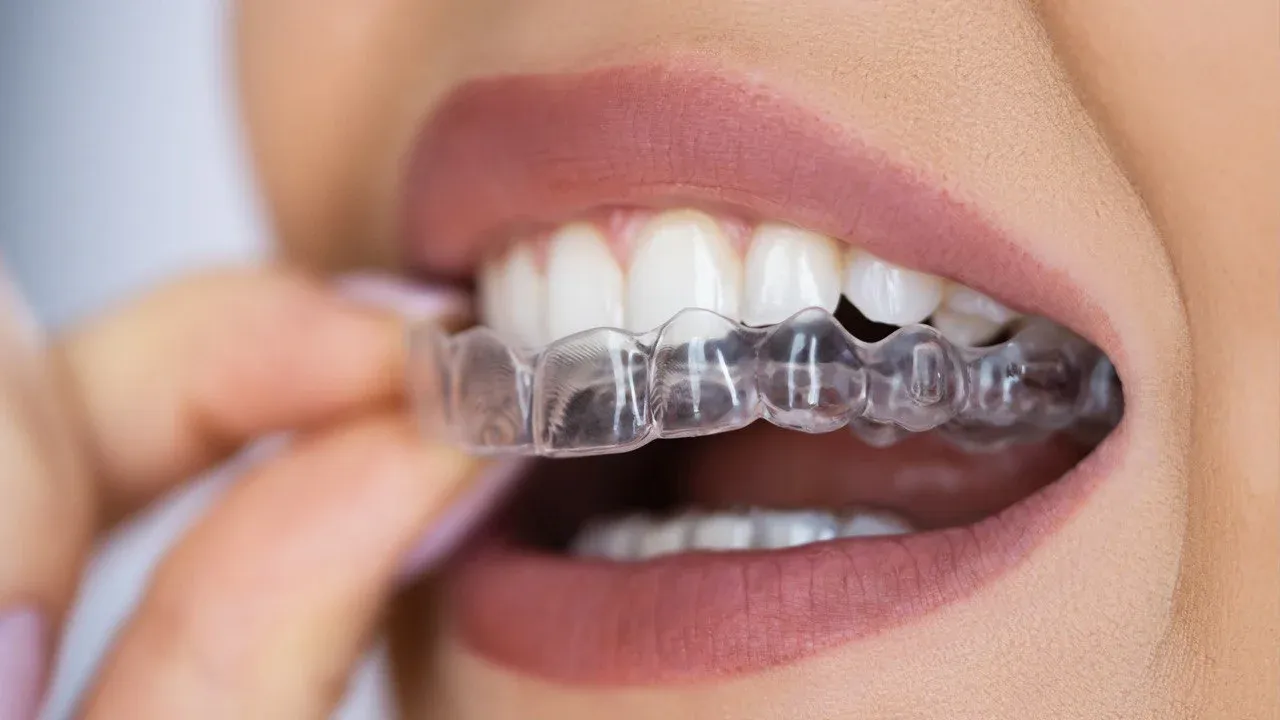
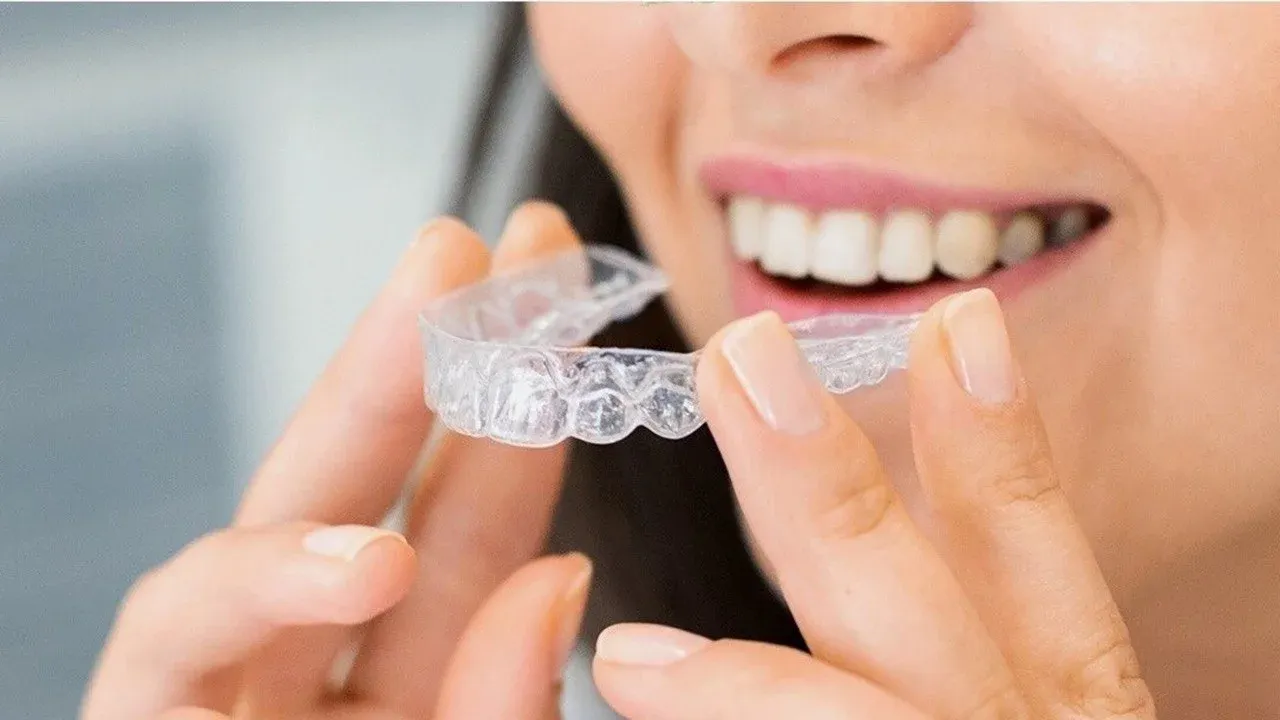
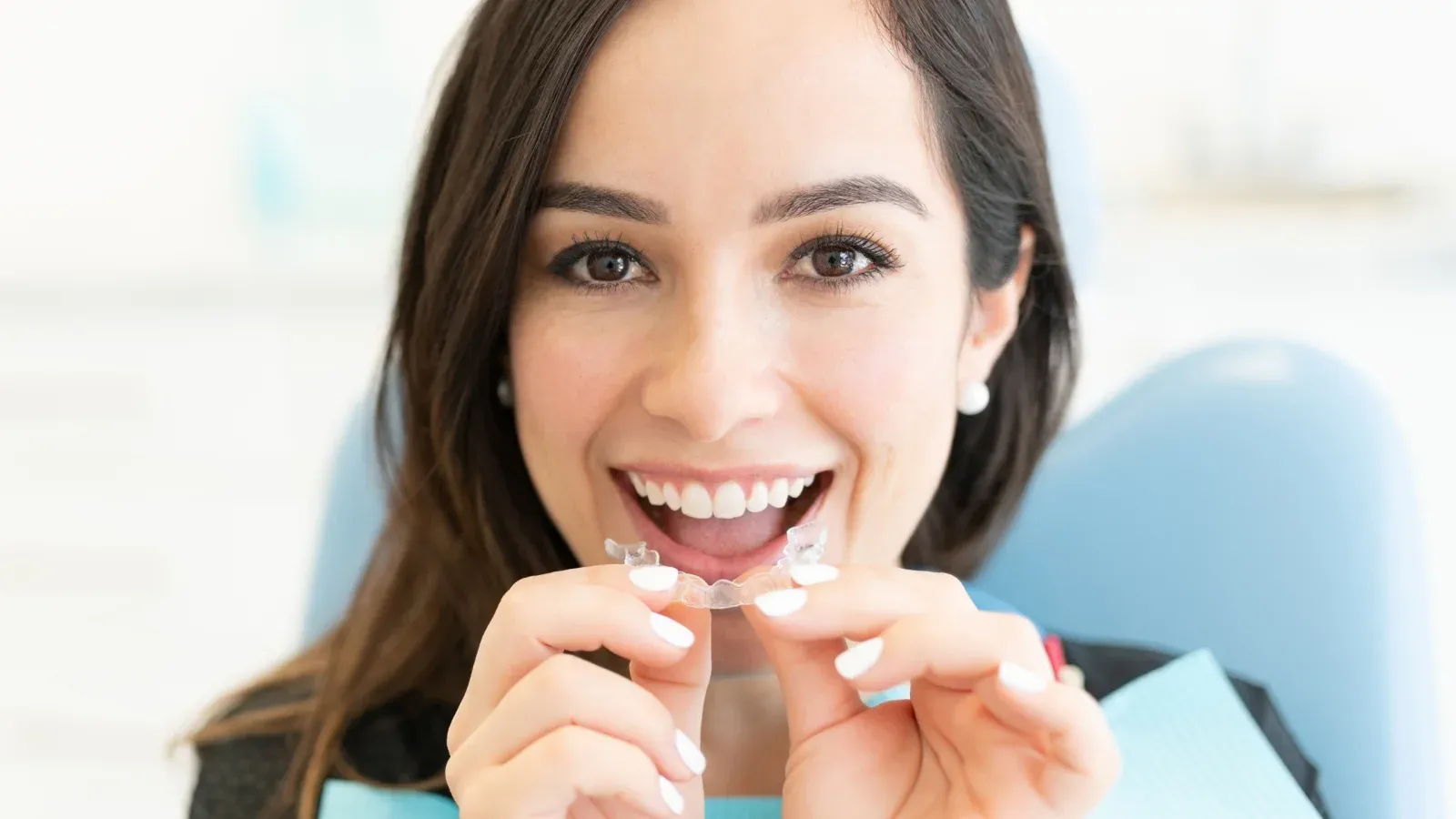
Removable braces are among the most modern methods for correcting malocclusions such as the crossbite. Many forms of crossbite can be resolved well today with Invisalign or aligner therapies. Aligners are particularly suitable for adults and also for adolescents who would like to avoid fixed braces.
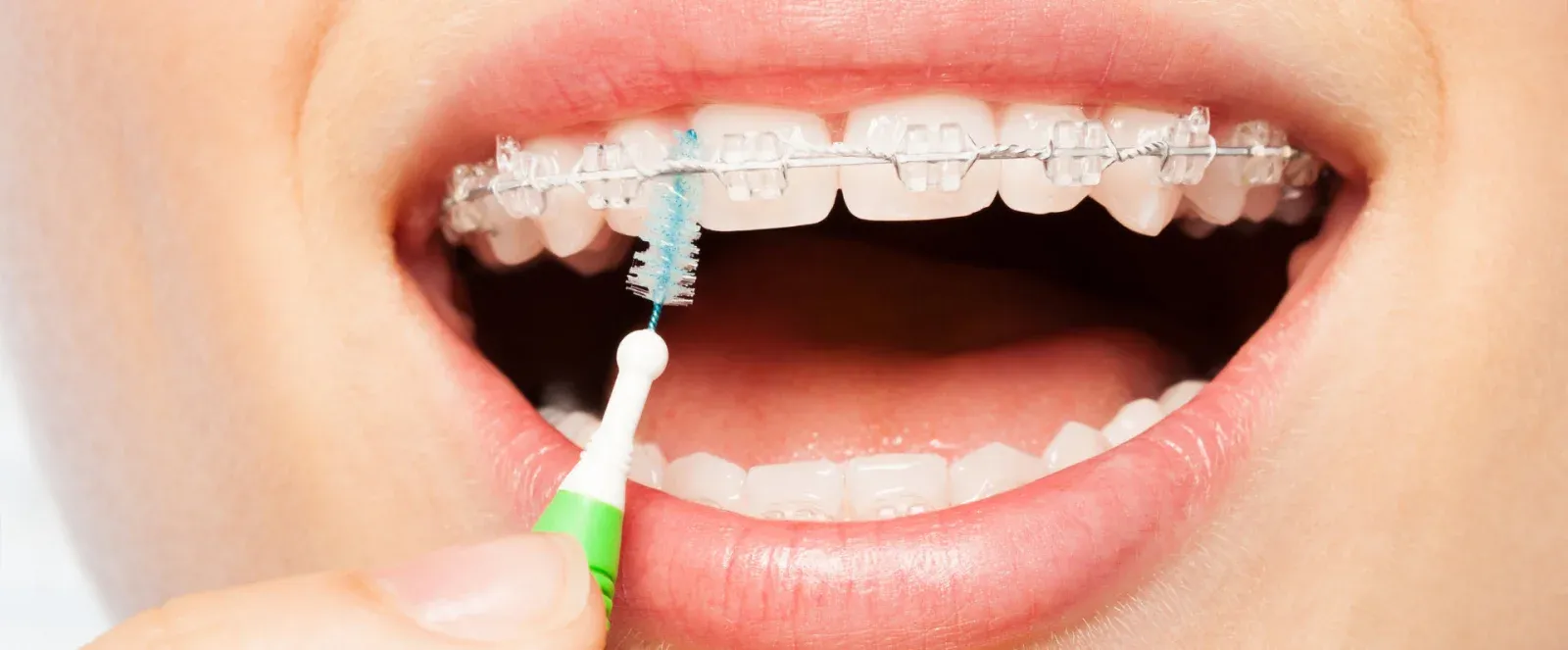
Fixed braces are among the classic methods for correcting malocclusions such as the crossbite. They consist of what are known as brackets, which are bonded individually to the teeth and connected to one another by archwires. The wires exert continuous pressure on the teeth and thus move them into the desired position. Fixed braces allow tooth movements to be controlled precisely and are therefore often used in complex cases.
Appliances such as the quad helix or slimline expander exert gentle pressure on the teeth and the palate in order to widen the upper jaw step by step and thus correct the crossbite. Methods of this kind are particularly suitable for younger patients whose jawbones are still growing and are therefore easier to shape.
Palatal expansion is a specific technique for widening the upper jaw. Using a special appliance that is adjusted regularly, it aims to stretch the bony suture in the palate. This widens the upper jaw and creates more space for the teeth.
For people with a pronounced crossbite in combination with other misalignments, functional appliances such as the Herbst appliance are also suitable. They use the change in jaw position while being worn to encourage the growth of the jaw and guide its alignment.
Prevention is better than any treatment. That also applies to malocclusions such as the crossbite. Genetic predispositions cannot be changed, but it is possible to avoid risk factors. These include above all certain habits that encourage a crossbite, such as thumb sucking or excessive use of a pacifier. You should also take your child to the dentist regularly from a very early age, so that any misalignments of the teeth and jaw are detected early and treatment can begin sensibly and early.
So a crossbite can be corrected in a number of quite different ways. Each of them offers specific advantages. Together we will find the best option for you. Dr. Hakim places great value on a personal consultation and on developing individual treatment concepts in which the choice of treatment method is tailored to your personal needs. The cause, type and severity of your crossbite as well as your age also play a role here. You will find out which treatment is best suited to you for achieving a healthy, well-functioning set of teeth and a radiant smile in a personal consultation with Dr. Hakim. It is best to arrange an appointment at our practice right away.
Featured
Diet Guidelines During Treatment with Braces
How to eat comfortably and successfully during your orthodontic treatment with braces or aligners
Read articleFeatured
Oral Hygiene for Braces Wearers
Tips for effective oral hygiene with braces: avoid tooth decay, white spots, and inflammation. Keep your teeth and braces healthy throughout the treatment.
Read articleFeatured
Teeth Correction for Adults and Seniors
Find out how clear aligners, lingual braces or fixed braces can also correct aesthetic and functional problems later in life.
Read articleFeatured
CBCT in Orthodontics Frankfurt | Precise 3D Diagnostics & Planning
Find out why cone beam computed tomography (CBCT) is crucial for your teeth straightening. Precise, with a low radiation dose at Hakim Healthcare Frankfurt.
Read articleFeatured
Aligner Therapy Avoids Tooth Extraction
Gentle aligner therapy is often possible without removing teeth. Learn when extractions can be avoided – get advice from Dr. Hakim in Frankfurt.
Read articleFeatured
Orthodontics vs. Prosthodontics
Orthodontics or prosthetic solutions? Why correcting your teeth with aligners or fixed braces is healthier and more sustainable in the long run.
Read articleFeatured
Aligner Myths at Hakim Healthcare Frankfurt
The aligner mystery – what is actually true? Hakim Aesthetics clears up the most common misconceptions and shows you what aligners can really achieve.
Read articleFeatured
Aligner Tips from Hakim Healthcare Frankfurt
Are you wearing aligners or planning a treatment? The best tips and tricks for a fast, effective and comfortable tooth correction.
Read articleFeatured
Dental Monitoring – Smart Orthodontics
Innovative orthodontics with Dental Monitoring at Hakim Aesthetics in Frankfurt. More precise control, fewer appointments – for efficient tooth correction.
Read articleFeatured
Interdisciplinary Aesthetic Dentistry
Interdisciplinary aesthetic dentistry at your orthodontist - how you benefit from the interdisciplinary collaboration in our Frankfurt practice!
Read articleFeatured
Digital Workflow in Dentistry
AI in dentistry? How is that supposed to work? Find out how you benefit from the digital workflow in dentistry and where its limits are.
Read articleFeatured
Dysgnathia | Causes, Symptoms and Treatment
Dysgnathia refers to a misalignment of the jaw. We explain the causes, the symptoms and the treatment options that are available to you.
Read articleFeatured
Overbite – Causes, Effects and Treatment
Correcting an overbite in Frankfurt – without surgery, without extraction. Dr. Hakim explains causes, effects & all treatment options. ✓ Personal initial consultation
Read articleFeatured
Gaps Between Teeth – Causes and Treatment
A gap between your teeth can look charming. But not everyone likes a gap between their teeth. We explain the treatment options available to you.
Read articleFeatured
Open Bite – Causes and Treatment
Treating an open bite – discreet & effective. Dr. Hakim, orthodontist in Frankfurt, explains all the options: aligners, fixed & removable braces.
Read articleFeatured
Crossbite – Causes and Treatment
A crossbite affects not only your appearance but also the function of your bite considerably. How a crossbite can be prevented and treated.
Read articleFeatured
Dental Splints and Aligners for Every Need
Correct misaligned teeth effectively but discreetly with a clear aligner or a dental splint.
Read articleFeatured
Options for Teeth Correction
A radiant smile adds a great deal to your self-confidence. Hakim Aesthetics orthodontics shows you the right solution for your teeth correction.
Read articleFeatured
Permanent Retainer: Lasting Tooth Correction
To make sure a tooth correction leads to lasting results, we use retainers. We explain what retainers are and when they are used.
Read articleFeatured
How Misaligned Teeth Can Be Treated
Misaligned teeth are widespread and disturb the visual appearance. We explain how they can be treated.
Read articleFeatured
Braces for Adults - Our Service
Braces for adults in Frankfurt – discreet & modern. Dr. Hakim offers fixed brackets, lingual braces & aligners. ✓ Arrange your consultation now.
Read articleFeatured
Straight Teeth for Adults
Straight teeth for adults in Frankfurt – with clear aligners or braces. Dr. Hakim advises you personally. ✓ Discreet, fast & without extraction.
Read article