Featured
Diet Guidelines During Treatment with Braces
How to eat comfortably and successfully during your orthodontic treatment with braces or aligners
Read article



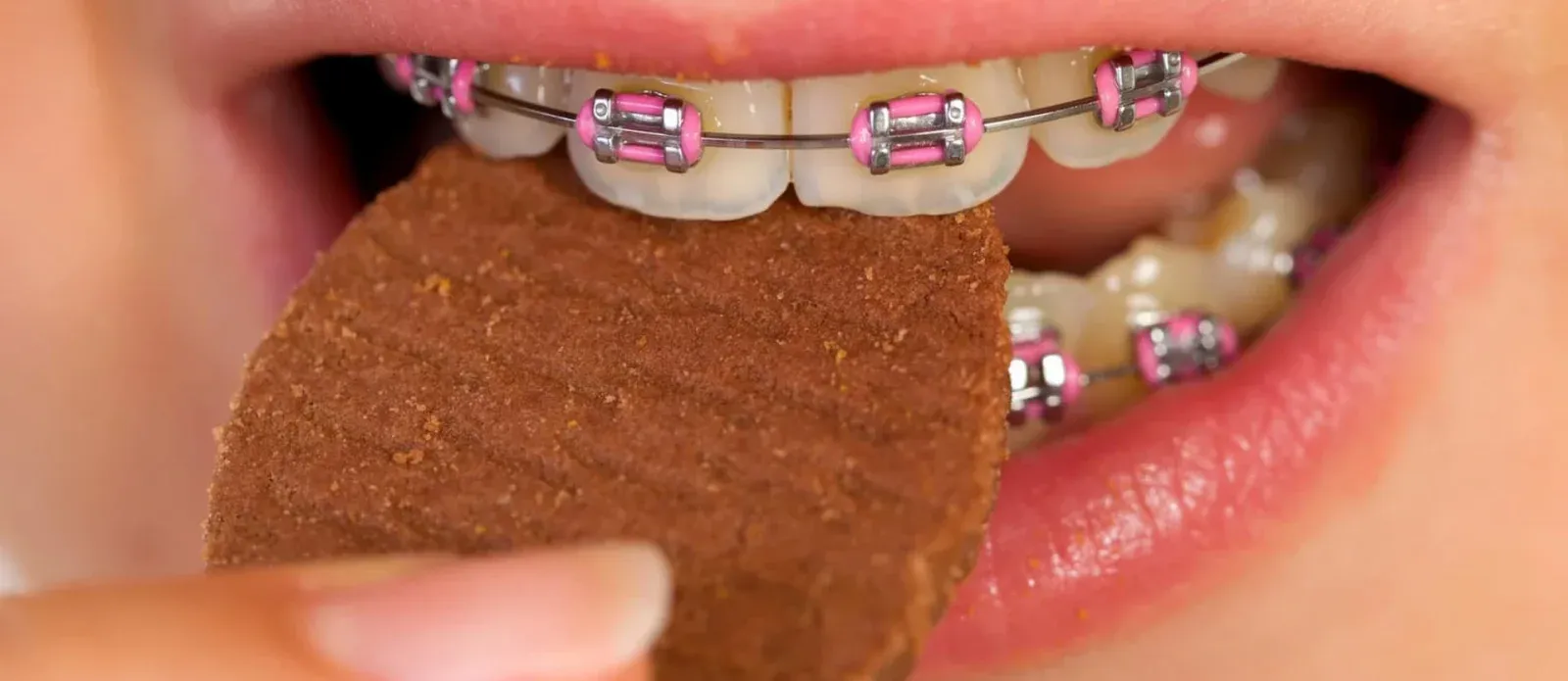
How to eat comfortably and successfully during your orthodontic treatment with braces or aligners
The essentials at a glance
In everyday modern life, orthodontic treatment with fixed braces, aligners or lingual systems has long been standard for many aesthetics-conscious adults, families and professionals in Frankfurt. Yet one success factor that is often underestimated is the right diet with braces. The foods you choose not only affect how comfortable eating and wearing your braces feels — they also actively influence the treatment time and help you avoid complications that need not happen at all.
A deliberate dietary strategy protects your teeth, keeps brackets and archwires from being damaged, lowers the risk of pain and inflammation, and gives you the reassuring feeling that your treatment is running a little more smoothly day by day.
The moment braces are placed, things begin to change – not only visually, but also in the way you handle food and drink. Everything you consume relates directly to how your braces function and whether they stay intact. With fixed brackets or lingual systems in particular, hard, sticky or fibrous foods can damage the appliance and lead to repairs and a longer treatment time.
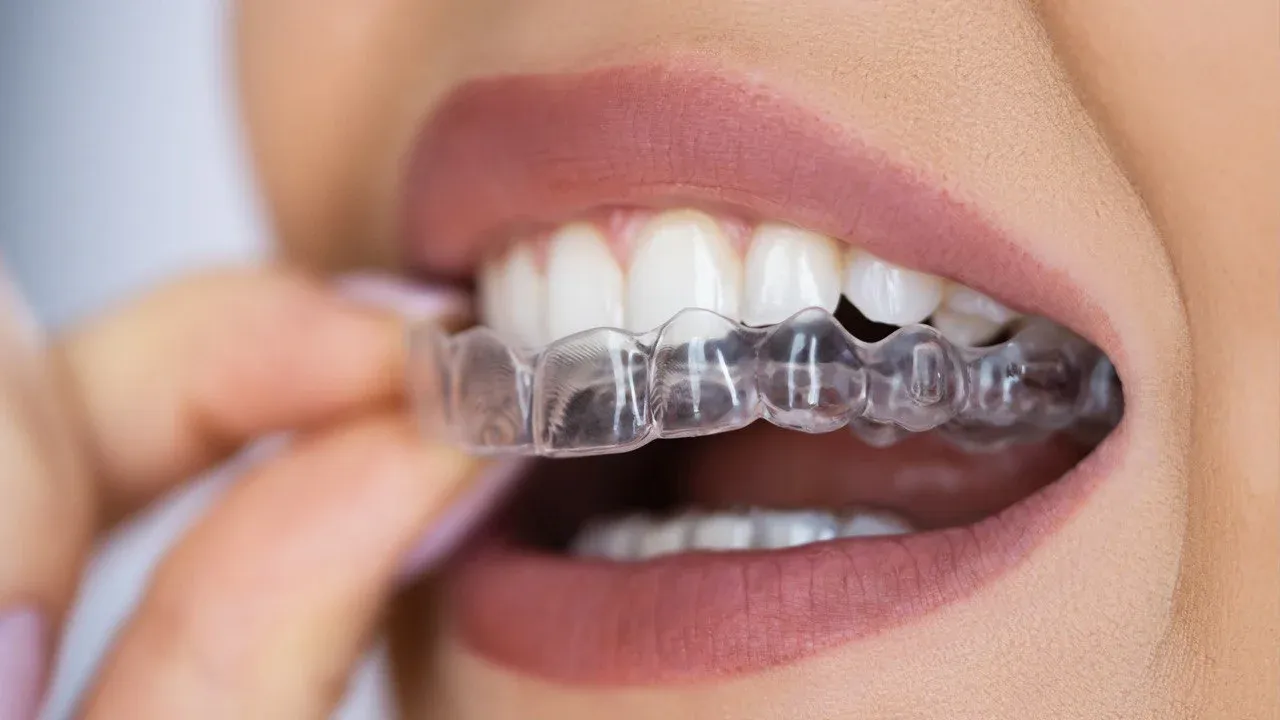
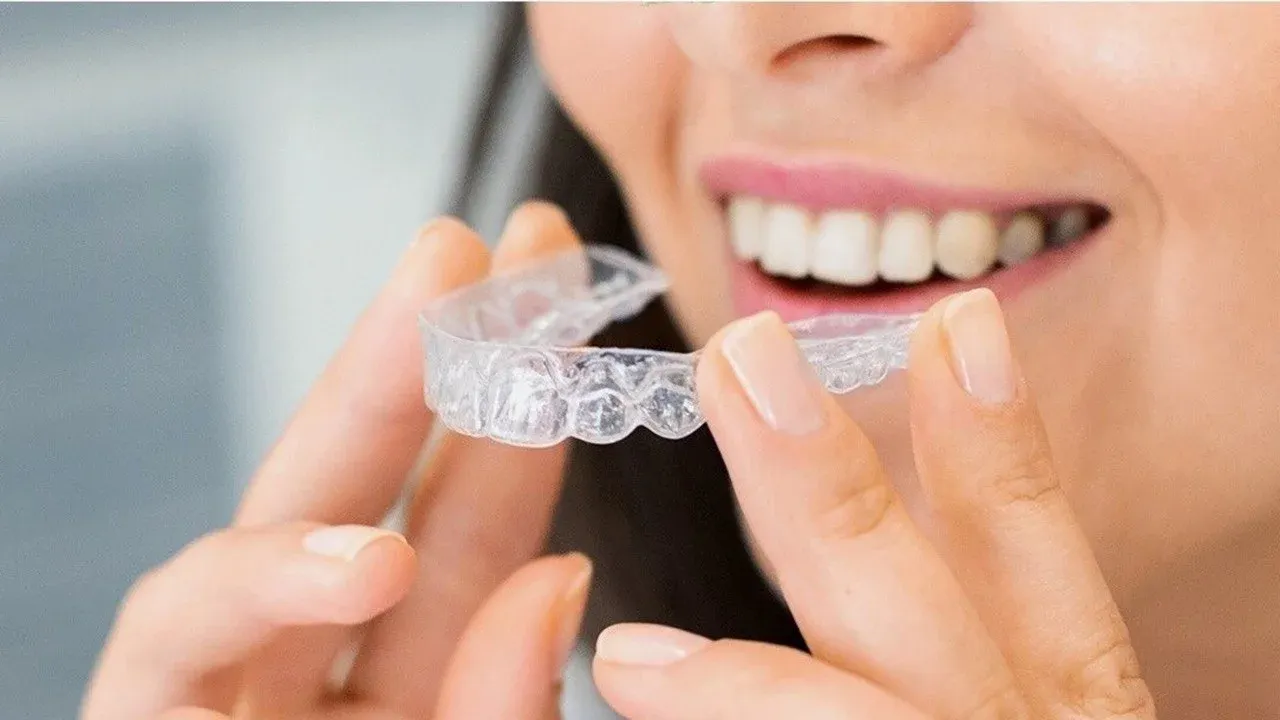
With aligners and invisible systems you enjoy more freedom when eating, but here too the goal is to avoid tooth decay and discoloration through careful choices and to maximize wear time. The basis for an optimal treatment outcome therefore always lies in sensibly adapting your eating habits.
During the adjustment period and after every adjustment of your fixed braces, you notice how sensitively your teeth and mouth react to pressure. The basic rule: the softer and milder the food, the less discomfort, risk of damage and irritation.
While you are wearing braces, the position of your teeth changes. That means the jawbone also has to grow back in order to hold the teeth in the right position. You can support your body with vitamins and calcium along the way. In consultation with your orthodontist and a nutritional counselor, you can additionally support bone formation with dietary supplements. They should contain vitamins D3 and K2 as well as calcium.
Studies:
https://onlinelibrary.wiley.com/doi/pdf/10.1002/fsn3.4035
https://pdfs.semanticscholar.org/2655/4e3df996e445f034f68e7d7c3b8303846621.pdf
https://www.mdpi.com/2227-9059/10/5/1048
https://www.frontiersin.org/journals/endocrinology/articles/10.3389/fendo.2025.1703116/full
Anyone wearing fixed brackets and archwires has to pay active attention to their food every day:
A single careless bite can lead to a loose bracket or a damaged wire – which choosing your food with foresight reliably prevents.
With aligner systems you get plenty of leeway in choosing your food, provided you keep the following in mind:
Through mindful timing, thorough cleaning and deliberate snack choices, your treatment stays as discreet and efficient as possible.
Every meal carries the risk that food residue will stick between brackets, wires or aligners. That increases the risk of tooth decay, inflammation and unwanted discoloration.
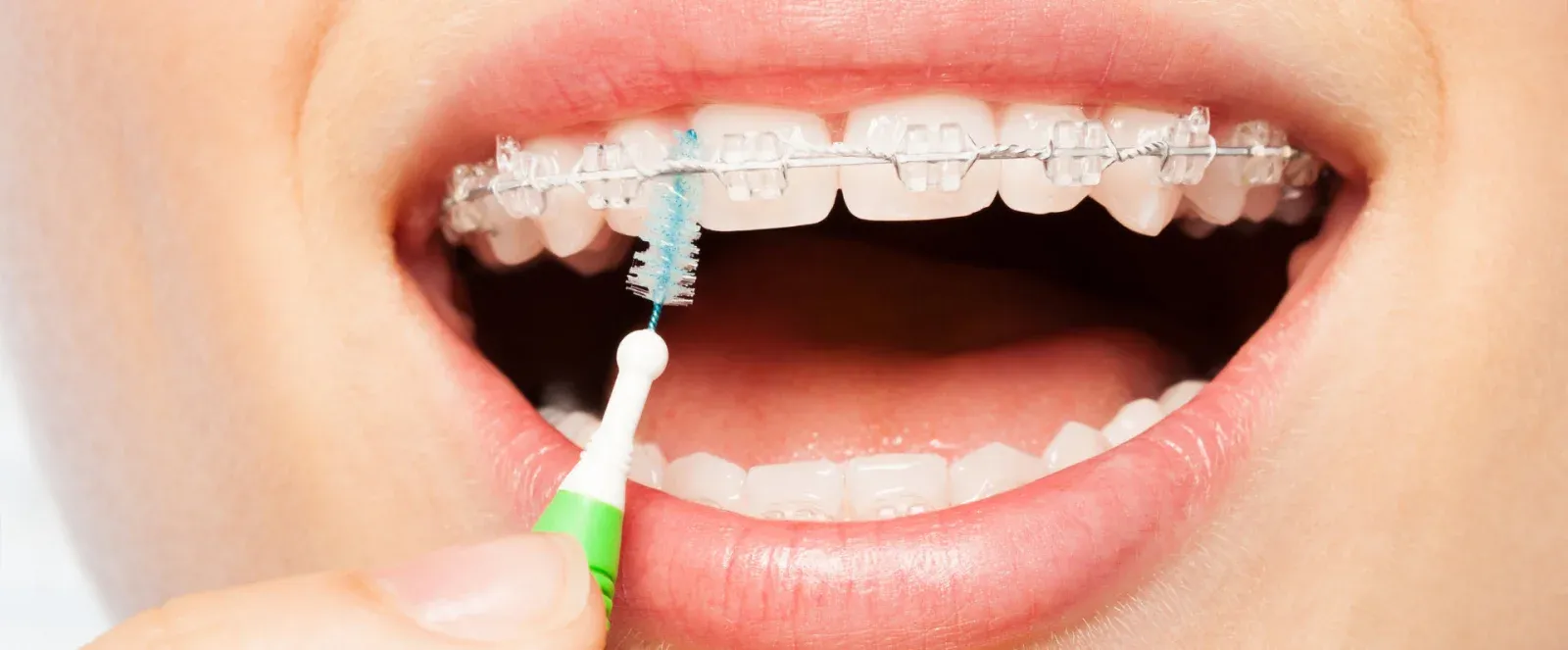
It is best to always carry a small toothbrush, an interdental brush and dental floss with you so that you can keep up optimal care when you are out and about.
In the first few days after placement or adjustment in particular, your mouth is especially sensitive:
By deliberately choosing soft, tooth-friendly foods and keeping up consistent oral hygiene, you lay the best foundation for an optimal treatment result – whether with fixed braces, invisible aligners or a lingual system. That way you reduce discomfort and make sure that brackets, archwires and your teeth are protected as well as possible. Every meal is an investment in your new smile – and thanks to smart preparation and flexibility, eating with braces becomes an important part of a successful treatment.
Look forward to your healthy, aesthetic smile and experience how expert care, modern technology and clear dietary guidance from Hakim Healthcare fit into your everyday life. More well-being, fewer complications – and the path to the most beautiful version of your smile!
Avoid hard nuts, popcorn, sticky candy, chewing gum, hard bread crusts and fibrous raw vegetables such as celery. These increase the risk of damage to brackets and wires.
With soft foods, consistent cleaning after every meal and the use of special toothbrushes, interdental brushes and plenty of water.
Giving it up entirely is not necessary – but you should strongly limit foods and drinks that are high in sugar. Pay attention to dental care afterwards.
Rinse it out with water right away and, if needed, clean with dental floss or suitable brushes. If problems persist: contact the practice.
Usually about 7-10 days – after that the new routine is established and everyday life becomes noticeably more comfortable.
Only finely sliced or cooked – and with aligners, always clean your teeth thoroughly before inserting them.
The risk of tooth decay rises sharply, especially underneath brackets – and the resulting damage lengthens the treatment time.
Ideally yes, with fixed braces. At the very least, rinse with water to loosen food residue.
They provide protein, strengthen teeth and gums and are gentle to chew – the ideal snack choice.
Contact the practice immediately and choose only soft foods until your appointment!
Ready for a relaxed smile? Book a consultation appointment at Hakim Healthcare on Frankfurt’s Zeil now and experience how modern orthodontics and the right diet take your tooth correction to the next level – for maximum safety, comfort and aesthetics.
Featured
Diet Guidelines During Treatment with Braces
How to eat comfortably and successfully during your orthodontic treatment with braces or aligners
Read articleFeatured
Oral Hygiene for Braces Wearers
Tips for effective oral hygiene with braces: avoid tooth decay, white spots, and inflammation. Keep your teeth and braces healthy throughout the treatment.
Read articleFeatured
Teeth Correction for Adults and Seniors
Find out how clear aligners, lingual braces or fixed braces can also correct aesthetic and functional problems later in life.
Read articleFeatured
CBCT in Orthodontics Frankfurt | Precise 3D Diagnostics & Planning
Find out why cone beam computed tomography (CBCT) is crucial for your teeth straightening. Precise, with a low radiation dose at Hakim Healthcare Frankfurt.
Read articleFeatured
Aligner Therapy Avoids Tooth Extraction
Gentle aligner therapy is often possible without removing teeth. Learn when extractions can be avoided – get advice from Dr. Hakim in Frankfurt.
Read articleFeatured
Orthodontics vs. Prosthodontics
Orthodontics or prosthetic solutions? Why correcting your teeth with aligners or fixed braces is healthier and more sustainable in the long run.
Read articleFeatured
Aligner Myths at Hakim Healthcare Frankfurt
The aligner mystery – what is actually true? Hakim Aesthetics clears up the most common misconceptions and shows you what aligners can really achieve.
Read articleFeatured
Aligner Tips from Hakim Healthcare Frankfurt
Are you wearing aligners or planning a treatment? The best tips and tricks for a fast, effective and comfortable tooth correction.
Read articleFeatured
Dental Monitoring – Smart Orthodontics
Innovative orthodontics with Dental Monitoring at Hakim Aesthetics in Frankfurt. More precise control, fewer appointments – for efficient tooth correction.
Read articleFeatured
Interdisciplinary Aesthetic Dentistry
Interdisciplinary aesthetic dentistry at your orthodontist - how you benefit from the interdisciplinary collaboration in our Frankfurt practice!
Read articleFeatured
Digital Workflow in Dentistry
AI in dentistry? How is that supposed to work? Find out how you benefit from the digital workflow in dentistry and where its limits are.
Read articleFeatured
Dysgnathia | Causes, Symptoms and Treatment
Dysgnathia refers to a misalignment of the jaw. We explain the causes, the symptoms and the treatment options that are available to you.
Read articleFeatured
Overbite – Causes, Effects and Treatment
Correcting an overbite in Frankfurt – without surgery, without extraction. Dr. Hakim explains causes, effects & all treatment options. ✓ Personal initial consultation
Read articleFeatured
Gaps Between Teeth – Causes and Treatment
A gap between your teeth can look charming. But not everyone likes a gap between their teeth. We explain the treatment options available to you.
Read articleFeatured
Open Bite – Causes and Treatment
Treating an open bite – discreet & effective. Dr. Hakim, orthodontist in Frankfurt, explains all the options: aligners, fixed & removable braces.
Read articleFeatured
Crossbite – Causes and Treatment
A crossbite affects not only your appearance but also the function of your bite considerably. How a crossbite can be prevented and treated.
Read articleFeatured
Dental Splints and Aligners for Every Need
Correct misaligned teeth effectively but discreetly with a clear aligner or a dental splint.
Read articleFeatured
Options for Teeth Correction
A radiant smile adds a great deal to your self-confidence. Hakim Aesthetics orthodontics shows you the right solution for your teeth correction.
Read articleFeatured
Permanent Retainer: Lasting Tooth Correction
To make sure a tooth correction leads to lasting results, we use retainers. We explain what retainers are and when they are used.
Read articleFeatured
How Misaligned Teeth Can Be Treated
Misaligned teeth are widespread and disturb the visual appearance. We explain how they can be treated.
Read articleFeatured
Braces for Adults - Our Service
Braces for adults in Frankfurt – discreet & modern. Dr. Hakim offers fixed brackets, lingual braces & aligners. ✓ Arrange your consultation now.
Read articleFeatured
Straight Teeth for Adults
Straight teeth for adults in Frankfurt – with clear aligners or braces. Dr. Hakim advises you personally. ✓ Discreet, fast & without extraction.
Read article