Featured
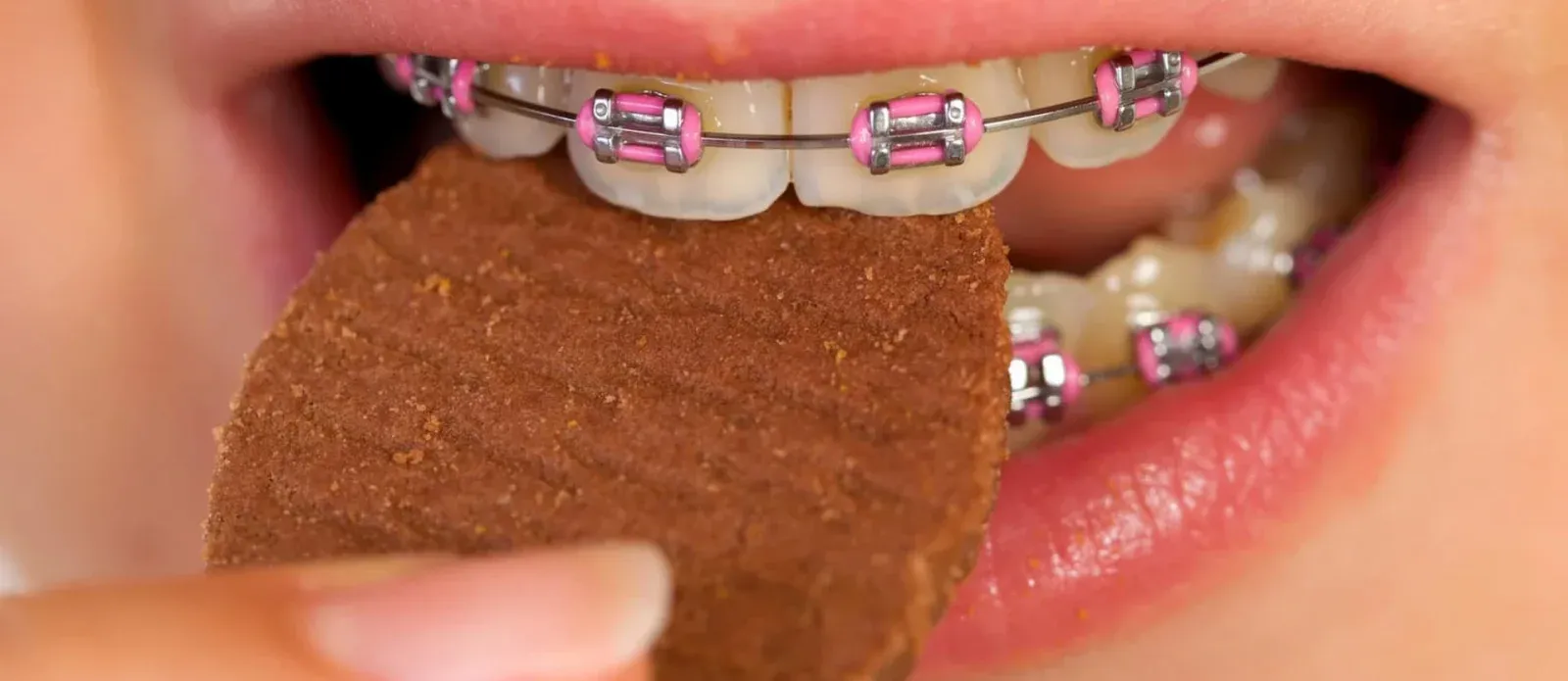
Diet Guidelines During Treatment with Braces
How to eat comfortably and successfully during your orthodontic treatment with braces or aligners
Read article



When can orthodontics replace surgery, crowns or veneers? Dr. Hakim in Frankfurt explains modern orthodontic methods. Book your consultation now.
“There is nothing that can be changed in my case. My teeth are too crooked, too damaged — my dentist said nothing more can be done.” Dr. Mohammad Hakim, orthodontist in Frankfurt, hears this sentence almost every day at his practice. And almost as often, he gets to explain to patients that, from the perspective of modern orthodontics, this assessment is simply out of date.
Because orthodontics today has long since stopped being just “braces for teenagers.” It has become the decisive preparation, the enabler and, in many cases, even the replacement for classic dental procedures. Where conventional dentistry would once have recommended crowns, veneers, root canal treatments or even surgery, well-planned orthodontic preparation now opens up new and considerably gentler paths.
In this article, Dr. Hakim shows six specific areas in which orthodontics is redefining the limits of dentistry — and in many cases even goes beyond them.
You have certainly seen the reports: patients travel abroad, have entire rows of teeth ground down all around and are then fitted with ceramic crowns. At first glance the result looks impressive — but the price for it is a massive, irreversible loss of healthy tooth structure.
What many people do not realize: for a large proportion of these patients, none of that would have been necessary. Because the real problem is often not the tooth structure itself, but the position of the teeth.
Crowded, tipped or rotated teeth can hardly be restored in a minimally invasive way. So-called nonprep veneers — wafer-thin ceramic shells that are bonded directly onto the tooth without any grinding at all — only work if the teeth are in the correct position. This is precisely where orthodontics comes in.
Using modern aligner methods, we move teeth into their ideal position. The prosthodontist or cosmetic dentist can then work with a fraction of the effort otherwise required — and in many cases avoid grinding entirely. That protects not only tooth structure, but also the nerve, sensitivity and long-term stability.
The rule of thumb: position first, form second.
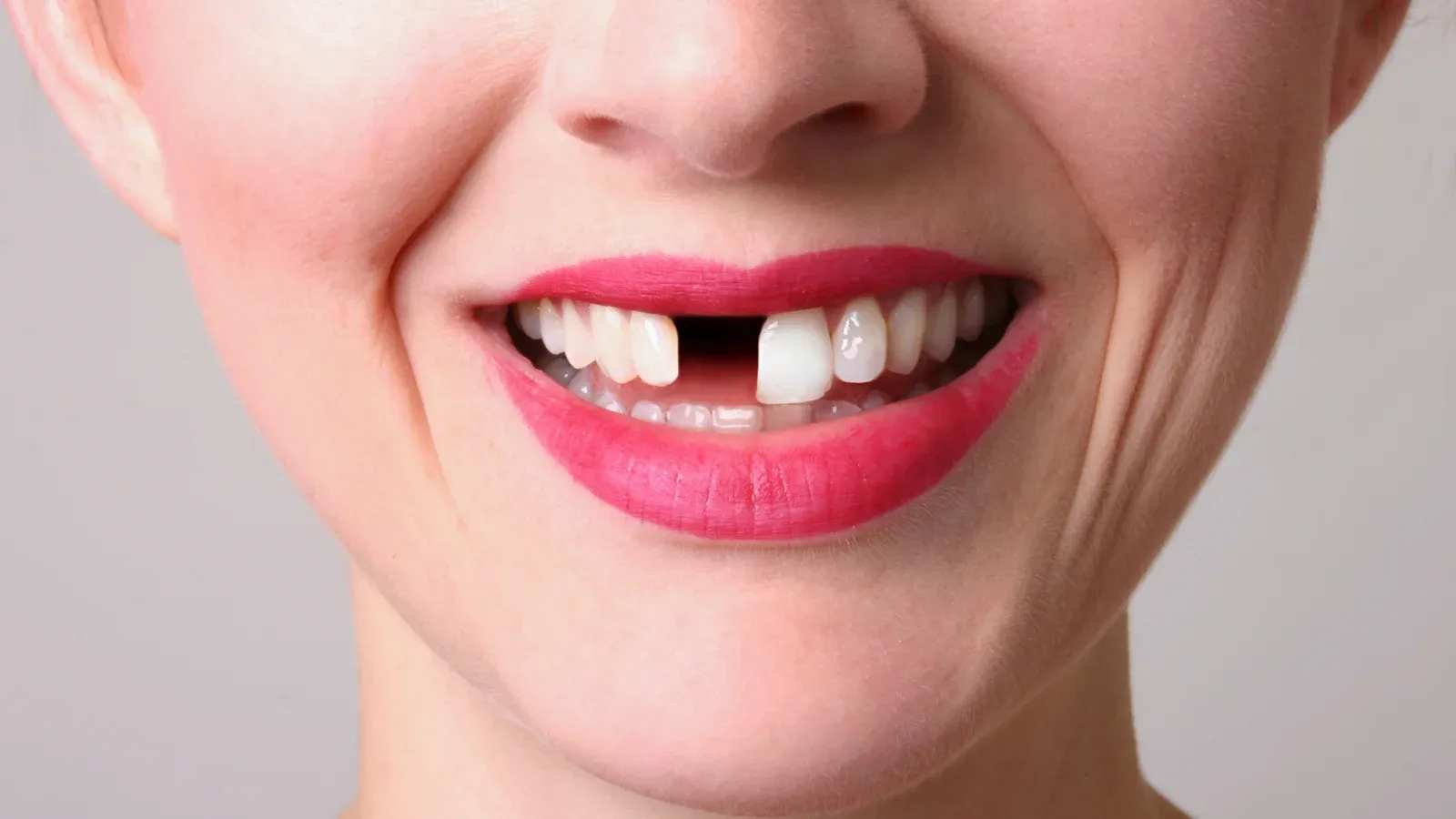
When a tooth is lost and the gap is not restored promptly, a quiet but consequential process begins: the neighboring teeth slowly tip into the gap. The opposing tooth grows downward or upward because it no longer has any support.
The result after a few years:
Orthodontics offers a way out of this dead end. We reopen the lost gap in a controlled way, upright the neighboring teeth again and create precisely the conditions the implantologist or prosthodontist needs. The result: a durable implant, a clean crown or bridge — on a healthy foundation.
Put differently: without orthodontic preparation, high-quality prosthetic treatment would in many cases hardly be possible any more.
An often overlooked topic: teeth whose height is no longer right because of malocclusion, fractures or missing opposing teeth.
Elongated teeth — that is, teeth that have grown too long — usually develop when there has been a gap in the opposing jaw over a longer period. The tooth “looks” for its counterpart and keeps erupting in an uncontrolled way. Shortened teeth, by contrast, result from fractures, wear or existing crowns that no longer have their ideal height.
The classic approach here would be crowns or further prosthetic restorations. With modern orthodontics we have a more elegant solution:
In this way a “lost” tooth becomes a tooth with a future again — ready for a new, healthy crown, a veneer, or simply to be preserved in its natural state.
Bruxism, that is grinding your teeth at night, leaves its marks. In many patients, the teeth have been reduced over the years to a smooth, flat chewing surface. The bite becomes flatter, contact between the upper and lower jaw is lost — and some people end up no longer able to chew properly.
The classic dental answer: restoring all teeth with new crowns. But that means removing even more of the already heavily reduced tooth structure — a paradox in patients who have lost that structure through grinding in the first place.
The orthodontic alternative: we change the inclination and position of the teeth so that the patient has a functioning bite again, needs considerably less grinding or none at all, and minimally invasive veneers or partial crowns are sufficient.
Dr. Hakim remembers a recent case: after years of grinding, a patient had practically no functioning bite left. Instead of a complete restoration with full crowns, the teeth could be optimized orthodontically so that only a gentle restoration was needed afterwards — with full chewing function.
The so-called gummy smile — a smile in which a disproportionate amount of gum is visible — was long considered a case for specialized procedures: gum contouring, grinding the teeth to make them look longer, or, in extreme cases, oral and maxillofacial surgery.
These procedures are invasive, carry risks and are a major hurdle for many patients. The good news: with modern orthodontic methods, a gummy smile can in many cases be reduced considerably without surgery.
We can position the teeth, and with them the visible portion of the gums, so that the smile looks more relaxed and more harmonious — without a scalpel, without moving bone, without a long recovery time. This requires careful diagnostics to determine whether the patient is among the suitable cases. That is exactly what we clarify in a personal consultation at our practice on the Zeil in Frankfurt.
Patients with a pronounced overbite or underbite used to receive almost the same reflexive recommendation every time: fixed braces plus oral and maxillofacial surgery.
Today the picture is more nuanced. In borderline cases in which the aesthetics of the face do not have to be corrected by surgery and function can be restored by tooth movement alone, the correction can be carried out with modern aligner technology — that is, with nearly invisible, removable aligners.
We move the teeth so that a harmonious bite position develops, without making the wrong compromises. When the aesthetics are right in the end and function is stable, that is for many patients the ideal middle way between “doing nothing” and “major surgery.”
Important: this decision is not made by an algorithm, but by sound individual diagnostics with a specialist orthodontist.
When it comes to aesthetics and function in dentistry, a single question should come before every larger treatment:
"Does it make sense to change the position of the teeth first, before changing anything about the teeth themselves?"
In countless cases, this guiding question prevents unnecessary grinding, root canal treatments, crowns, bridges or surgery. It gives patients the option of a minimally invasive, tooth-preserving and long-term stable solution.
Modern orthodontics does not replace dentistry — it creates good conditions for dentists to do their work calmly and to the highest standard.
Have you already been told that “a lot needs to be done” to your teeth? Before you decide on an invasive procedure, a second, orthodontic perspective is often worthwhile. At our practice Hakim Healthcare at Zeil 81 in Frankfurt, Dr. Mohammad Hakim, specialist orthodontist, takes the time for thorough diagnostics and an individual treatment plan — modern, transparent and tailored to your wishes.
Book your no-obligation consultation now and find out what possibilities modern orthodontics holds for you personally.
Featured
Diet Guidelines During Treatment with Braces
How to eat comfortably and successfully during your orthodontic treatment with braces or aligners
Read articleFeatured
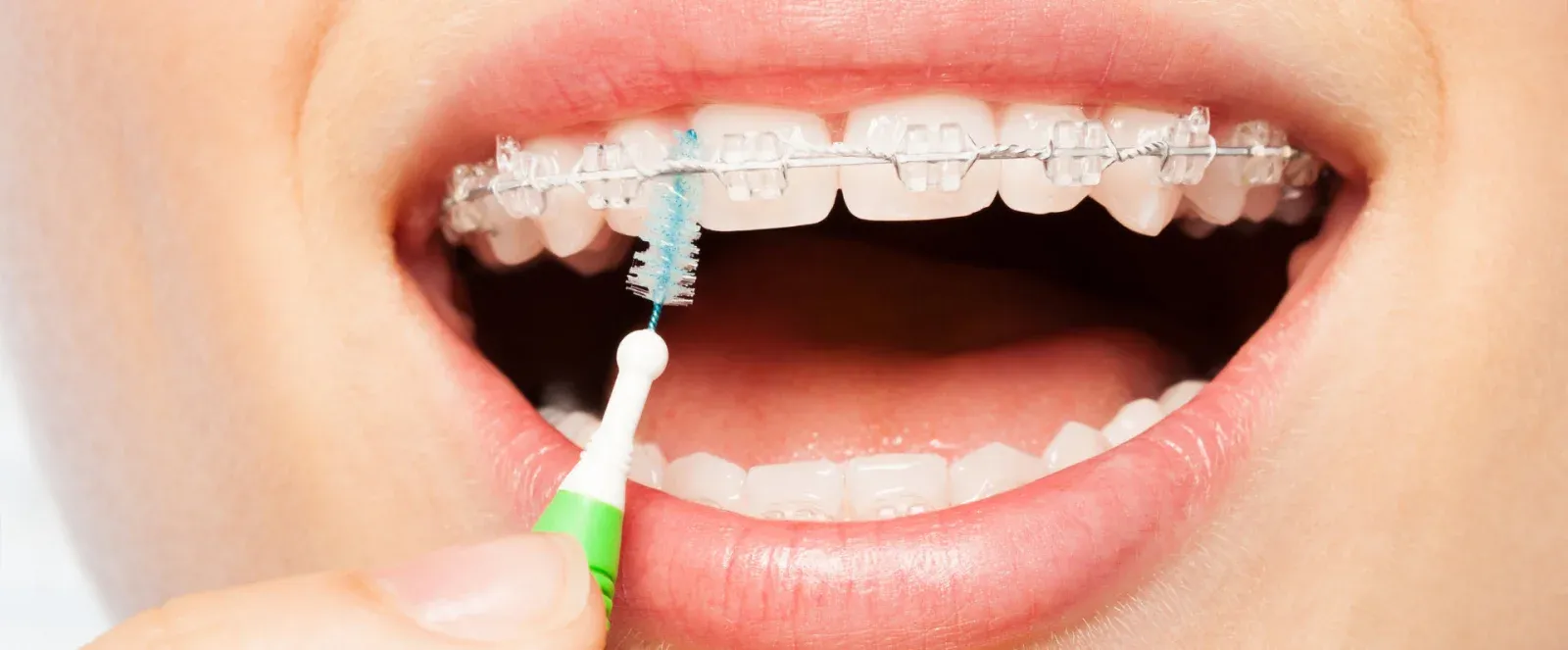
Oral Hygiene for Braces Wearers
Tips for effective oral hygiene with braces: avoid tooth decay, white spots, and inflammation. Keep your teeth and braces healthy throughout the treatment.
Read articleFeatured
Teeth Correction for Adults and Seniors
Find out how clear aligners, lingual braces or fixed braces can also correct aesthetic and functional problems later in life.
Read articleFeatured
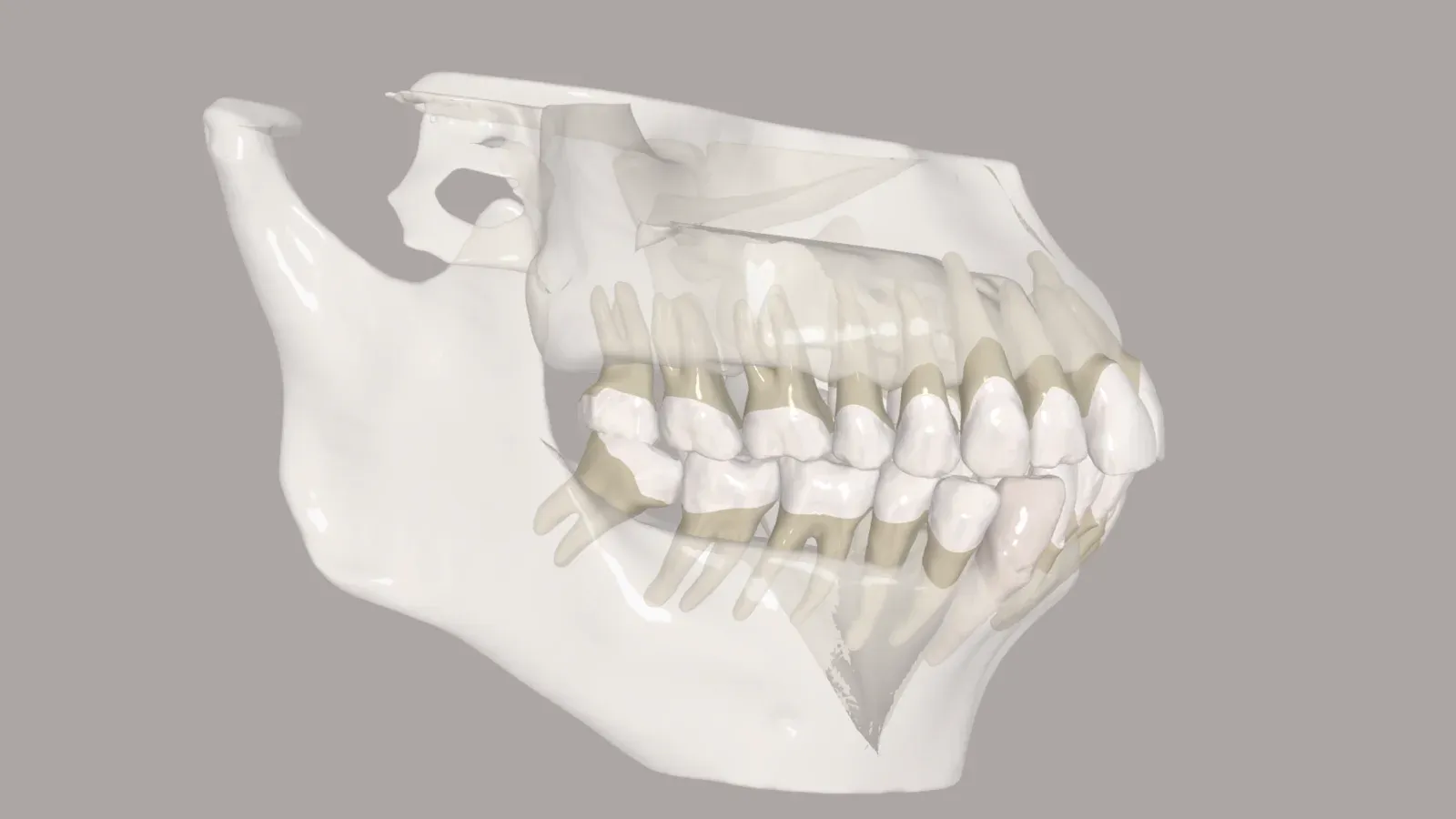
CBCT in Orthodontics Frankfurt | Precise 3D Diagnostics & Planning
Find out why cone beam computed tomography (CBCT) is crucial for your teeth straightening. Precise, with a low radiation dose at Hakim Healthcare Frankfurt.
Read articleFeatured
Aligner Therapy Avoids Tooth Extraction
Gentle aligner therapy is often possible without removing teeth. Learn when extractions can be avoided – get advice from Dr. Hakim in Frankfurt.
Read articleFeatured
Orthodontics vs. Prosthodontics
Orthodontics or prosthetic solutions? Why correcting your teeth with aligners or fixed braces is healthier and more sustainable in the long run.
Read articleFeatured
Aligner Myths at Hakim Healthcare Frankfurt
The aligner mystery – what is actually true? Hakim Aesthetics clears up the most common misconceptions and shows you what aligners can really achieve.
Read articleFeatured
Aligner Tips from Hakim Healthcare Frankfurt
Are you wearing aligners or planning a treatment? The best tips and tricks for a fast, effective and comfortable tooth correction.
Read articleFeatured
Dental Monitoring – Smart Orthodontics
Innovative orthodontics with Dental Monitoring at Hakim Aesthetics in Frankfurt. More precise control, fewer appointments – for efficient tooth correction.
Read articleFeatured
Interdisciplinary Aesthetic Dentistry
Interdisciplinary aesthetic dentistry at your orthodontist - how you benefit from the interdisciplinary collaboration in our Frankfurt practice!
Read articleFeatured
Digital Workflow in Dentistry
AI in dentistry? How is that supposed to work? Find out how you benefit from the digital workflow in dentistry and where its limits are.
Read articleFeatured
Dysgnathia | Causes, Symptoms and Treatment
Dysgnathia refers to a misalignment of the jaw. We explain the causes, the symptoms and the treatment options that are available to you.
Read articleFeatured
Overbite – Causes, Effects and Treatment
Correcting an overbite in Frankfurt – without surgery, without extraction. Dr. Hakim explains causes, effects & all treatment options. ✓ Personal initial consultation
Read articleFeatured
Gaps Between Teeth – Causes and Treatment
A gap between your teeth can look charming. But not everyone likes a gap between their teeth. We explain the treatment options available to you.
Read articleFeatured
Open Bite – Causes and Treatment
Treating an open bite – discreet & effective. Dr. Hakim, orthodontist in Frankfurt, explains all the options: aligners, fixed & removable braces.
Read articleFeatured
Crossbite – Causes and Treatment
A crossbite affects not only your appearance but also the function of your bite considerably. How a crossbite can be prevented and treated.
Read articleFeatured
Dental Splints and Aligners for Every Need
Correct misaligned teeth effectively but discreetly with a clear aligner or a dental splint.
Read articleFeatured
Options for Teeth Correction
A radiant smile adds a great deal to your self-confidence. Hakim Aesthetics orthodontics shows you the right solution for your teeth correction.
Read articleFeatured
Permanent Retainer: Lasting Tooth Correction
To make sure a tooth correction leads to lasting results, we use retainers. We explain what retainers are and when they are used.
Read articleFeatured
How Misaligned Teeth Can Be Treated
Misaligned teeth are widespread and disturb the visual appearance. We explain how they can be treated.
Read articleFeatured
Braces for Adults - Our Service
Braces for adults in Frankfurt – discreet & modern. Dr. Hakim offers fixed brackets, lingual braces & aligners. ✓ Arrange your consultation now.
Read articleFeatured
Straight Teeth for Adults
Straight teeth for adults in Frankfurt – with clear aligners or braces. Dr. Hakim advises you personally. ✓ Discreet, fast & without extraction.
Read article